Tuesday, December 13, 2016

Ready for the Winter


This week at the Redwood Sustainable Agriculture Farm, we have been busy trying to keep our beds in the best shape possible. Even though the weather is now shifting and the seasons are changing, it is still important to take care of our beds even though not much planting or harvesting can be done. In the farm, many of us focused mainly on our Maintenance Jobs in order to get the farm prepared for the upcoming winter and simply making our farm a better place to farm and create effective ways to manage our farm. This week also consisted of plenty of classroom time in which we all took results that we accumulated in this semester from our beds and converted it into information for the entire class and even ourselves to learn about what future plans and how to make our farm more sustainable in the years to come.


In our bed, A1, we noticed that our crop yield was pretty high, however our compost was not that much. After learning from our data that we have collected, we have a new goal to produce plants that can be used for compost in order to help our soil grow and make a perfect place for calorie crops to grow in. Many others presented about their beds and talked about their yields and problems that have occurred during this semester.  -Aarti


Wednesday, December 7, 2016

Beetle Companions

by Charlie Bucklar

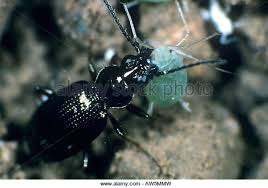
These last couple weeks we have learned a lot about different companions on our farm, and how they can be both beneficial and harmful towards our crops.  One farm companion that I took a closer look at and learned a lot about in doing my companions report is the common black ground beetle.  This beetle is found all over the world and lives in the soil as well as under rocks, leaves and branches.  It is also a very beneficial companion that preys on a variety of different insect and mollusk pests, including Aphids, cucumber beetles, caterpillars, slugs, and snails.  
There are three major ways to sustainably attract these beetles to our farm.  The first is to plant crops with lots of leaves to form canopies over the soil (corn, bell beans, lettuce, carrots, other leafy crops).  These canopies provide the ideal habitat for ground beetles as they allow them to hide away from predators out in the open (birds, rodents, toads).  Laying down thick organic mulch is also a good way to provide ample shelter and refuge for these beetles.  The other major way to encourage more of  these companions to live on our farm is to plant nectar producing crops (Alfalfa, squash, broccoli, strawberries, etc).  These plants attract airborne predators (yellow jackets/hornets) that drive aphids and other prey closer to the ground.  This provides more available food for the common black ground beetle as well as other beneficial ground-dwelling beneficial pest predators.  

Image result for common black ground beetleImage result for ground beetle eating aphid


Tuesday, December 6, 2016

Iron Chef #2

This week we had our second Iron chef competition. We started by harvesting our produce from the farm. Some groups decided to bring in extra ingredients from home or the store. We took all our ingredients to the teachers lounge to prepare our master dishes. All groups anticipated the moment when Mr. Stewart gave the go ahead to start cooking. Once he said go, the chefs got their knifes out and started chopping their freshly picked produce. It was a very intense atmosphere as all four groups were cooking up a storm on the one four burner stove. Olive oil, salt, vegetables, and herbs were all being passed around the room. One of the vice principles was drawn into the room by the rich smells of our cooking filling the hallway. He complimented us on our cooking and went on back into the hall way. The competition was friendly as groups would give each other tips and a helping hand. After everyone was done and all cleaned up, it was the moment we had all been waiting for... the judging. As our judges, Mr. Stewart and Laura, were sampling the food, the groups were have friendly debates as to why their dish was better than the rest. A member from each group got up to show the class there dish and give them a little description of what they had prepared. Hungry students hands whet flying out as soon as the dishes came to their table. The students sampled all the dishes as well as the teachers, but the most enjoyed amongst the students was the french fries. The only opinion the groups were interested in was of the judges. Mr. Stewart and Laura talked amongst them selfs and came to the agreement that they most enjoyed the potato and salad dish made by Morgans group. We were all happy to participate in our second iron chef and let our competitive side show. I'm sure everyone is anticipating our next competition with hopes of winning.


- Dezire Celis and Ariella Bellingham 


​
​

Wednesday, November 23, 2016

A Great Egret Spotted

Although this week was quite a short one, it was still a productive one. From hearing the presentations of year 2 students regarding companions to working on our new management jobs, we have continued to enhance our understanding of the big picture of what Sustainable Agriculture is truly about. For instance, by promoting companions on our farm we are helping to create a more balanced ecosystem and so by mimicking nature we are working towards sustainability.

One particular type of companion I have seen during our area searches and farm walks are indicator species, mainly birds. I have observed about 4-5 white birds, which might have been seagulls, lining up in a single file line around the marshes. On our most recent farm walk, a seagull briefly flew past our farm. But more fascinatingly, this Wednesday morning, one Great Egret was waiting for me as I opened the gate to our farm. It was strolling peacefully around the area near our A-beds, but more than likely doing so in search for prey. These observations have made me realize even more greatly the importance of these indicator species since they serve as evidence for the quality of our environment. Their abundant presence over these past few days indicate that our farm is clean and thriving. Because the voles have been scavenging around our crops shown by the holes in the spinach leaves, their population is being kept in check by species such as the Great Egret. On a more general level, seagulls and great egrets generally thrive in marsh habitats near our farm area and their appearance also indicates that we have been successfully mimicking nature.

- Andrea Silvera


Tuesday, November 22, 2016

Farm Walk


This week on the RHS Sustainable Agriculture Farm, we put in a lot of good work cleaning up our beds and also started our new management jobs. We started the week off with a farm walk. On the farm walk we observed the progress we've made from the beginning of the year and we also pointed out areas that need more work. Some areas needing extra work are the pathways. They need cardboard and wood chips to be laid down along with some light weeding. There are also some beds with plants growing onto the paths which should be trimmed back. The rest of the farm work this week was devoted to our one beds and learning our new management jobs. We have also been using this week to polish our final drafts of our companion reports. Personally, the companion report has made me more aware of beneficials and pests that are prevalent on our farm. On Friday we began a film about bees called More Than Honey. It detailed the life of honey bees and how these beneficials help plants. It also showed the different ways that bees are used by humans. Next week we look forward to hearing from our year 2 students and the lessons they have planned for us on Monday.

-Max

Monday, November 14, 2016

Aphids


This week consisted of working on the farm and composing our companion report. On Monday and Tuesday we worked on our companion report and on Wednesday we worked on our farm jobs and one bed projects.


My companion report was about Aphids. Aphids are a little green bug and a pest to the farm. They mainly attack newly germinated crops as they are easy to eat and do not have any protection methods grown in yet. Aphids reproduce extremely fast and whole farms can be destroyed if the Aphid population gets too out of hand. 

In order to combat Aphids there are many organic techniques that can be used. One of which is to use Neem oil mixed with a little bit of water and spray it on the crops. Neem oil is a common oil that a lot of other pests do not like. Another way of getting rid of them would be to grow natural pest repelling plants such as onions and garlic. Finally, introducing beneficial bugs can also get rid of Aphids. For example, introducing spiders will be good for the farm as they only eat other bugs, not plants, meaning that the Aphids will die. 


There are many other companions on the farm that other students have done their reports on. Aside from pests, beneficial companions are lady bugs, spiders, garlic/onions, and cover crops. 


-Mya

Tuesday, November 8, 2016

Companions

This week we had a lesson on companions in the classroom as well as spending some time out at the farm working on our management jobs, our one beds, and preparing for our market day on Friday. We also took a short field trip to the marsh near the school on order to get a closer look at the ecosystem that we are trying to mimic. We observed several indicator species such as ducks which tell us that the ecosystem is healthy because a top predator feels like it has enough food and shelter. We also observed some of the features of the surrounding area that may lead to problems on our farm such as the marshy land that leads to flooding and the brackish water that may cause salinity problems. We observed and drew an area of the marsh as well as our farm and noted the natural features that make both of them similar.

During block period everyone worked on their management jobs and were able to get a lot done. My group sheet mulched and placed wood chips down on a large section of the farm near the hoop house, preventing weeds from growing and creating a clearly marked area to walk without stepping in the beds.

Friday was market day! We had a huge harvest with lots of kale that we had planted in our beds a few months ago as well as the rest of the lettuce. We harvested a lot of basil as well as a bunch of celery and rosemary. It's amazing to see so much growth over the past few months!

-Kobe
IMG_20161104_130346.jpg