RHS SustAg is adjusting to life out of the school building and away from the farm due to COVID-19. How are we adjusting? Look for updates here.
Be well.
--Mr. Stewart
Thursday, March 19, 2020

Market Day, March 6, 2020
Market Day, March 6, 2020
Jack Finnegan, 5˚

It is the first Friday of March, which means we have our monthly farmers market. As always, we will be located in the front lot by the flagpole and in the backlot from 2-3:45pm. Although it is the end of the winter season so we will not have as much produce, but we will still have potatoes, kale, celery, mixed greens, and possibly onions. The reason we don't have as much as normal is because throughout the winter we focused on cover crops and compost crops in order to maintain our soil integrity. We have also been focused on harvesting our bell beans in order to create new compost piles and to allow the roots and rhizomes to decompose in our soil, enhancing the quality and amount of nitrogen in our soil. Since we have smaller amounts of produce available, we will really have to focus on our marketing strategies, namely "stack em high, watch em fly," in order to create the appearance of abundance so that more people will be interested in buying our goods. The profits from these markets go to maintain tools on the farm, getting, new tools, buying seeds, soil, and other pieces of equipment needed on and around the farm. Be sure to stop by and support your local Redwood Sustainable Farm this Friday, see you there!
Guest Presentations
Nick Welch 3/4/20
This week in Sustainable Agriculture we had two guest speakers come on. First we had a passionate tree farmer come in on monday and talk about fruit forests and tree grafting. I had no idea what you can do with different fruits on trees. He explained to us that you can put different types of plums on one plum and put different types of apples on one apple tree. It takes a lot of time but it is something that I think is very fascinating. It is very quick as the tree starts producing in a year or so. This is something that takes a lot of patience but the end result is very cool. I think a special type of person that loves trees would be the best for this sort of job. The second guest speaker who came in on March 3rd spoke to us about sheeps. His name was Aaron and he was a shepherd. He talked about the joys and hardships of being a shepherd. Aaron seemed very passionate about his job and even mentioned he had a special connection with some of his sheep. He said his biggest problem is not having a home base between contracts to keep his sheeps. Overall I think having people come in who are passionate about their jobs is a very good thing for us to experience.

Wednesday, March 4, 2020
Sustainable Systems Guest Speakers - Permaculture and Shepherd
This past week in Sustainable Agriculture we had two guest speakers come into our class and talk to us about their livelihoods and how they connect with our sustainable systems/design unit. The first speaker, John Valenzuela, spoke to us primarily about permaculture and food forests. Permaculture is a way of viewing agriculture as a larger system, focussing on patterns observed in nature that promote sustainable growth and don't disrupt habitats. Food forests are agroforestry systems that practice growing crops with trees so large amounts of food can be packed into small spaces, all while focussing on the vertical growing aspect of plants. Another concept Mr. Valenzuela taught us about was grafting, a horticulture technique that allows people to use healthy rootstocks of fruit trees and transplant the better tasting varieties of that same fruit which grows into normal functioning trees. The following day, Aaron Gillam, a Redwood alum and now shepherd came to discuss his line of work. Mr. Gillam owns and operates Sweetgrass Grazing, a mobile sheep/goat grazing company. He highlighted how with this job he is a land steward and can control how he and his animals impact the land. His operation is used to suppress weeds, rebuild soils, and help prevent wildfires. Overall, both presentations were very engaging, interesting, and allowed time for many of our questions to be answered.
By: Ryan Carlson

Pictured Above: The second guest speaker and Owner/Founder of Sweetgrass Grazing, Aaron Gillam, out in the field running his operation
Monday, March 2, 2020
The Muddling of the Mint
Mint is a great herb in our farm that is abundant and can be used for many dishes. It’s renowned for its signature scent, taste, and cool feel down your throat. I have now used mint twice for my Farm 2 Fork and I use it regularly in the kitchen. Mint is a great and easy way to make many refreshing beverages from mocktails and milkshakes to mochas. A key technique to making these drinks that I will teach you how to use is called muddling.
So what is muddling? Basically muddling is a technique used to gently mash herbs or fruits to release their pure oils or juices. People can use a muddler if they have one but the back of a spatula or most utensils with a knobby end will do you well. Mint isn’t the only thing you can muddle; basil and lemons are also popular, but mint is most common because it binds very well with alcohol in cocktails. To muddle the mint you have to be very cautious because there are veins in the mint containing bitter chlorophyll that you don’t want, so be sure not to grind it to a pulp or cut the leaf.


Aphids
Rylee Sankowich
2/26/2020
Wednesday 2/26/2020
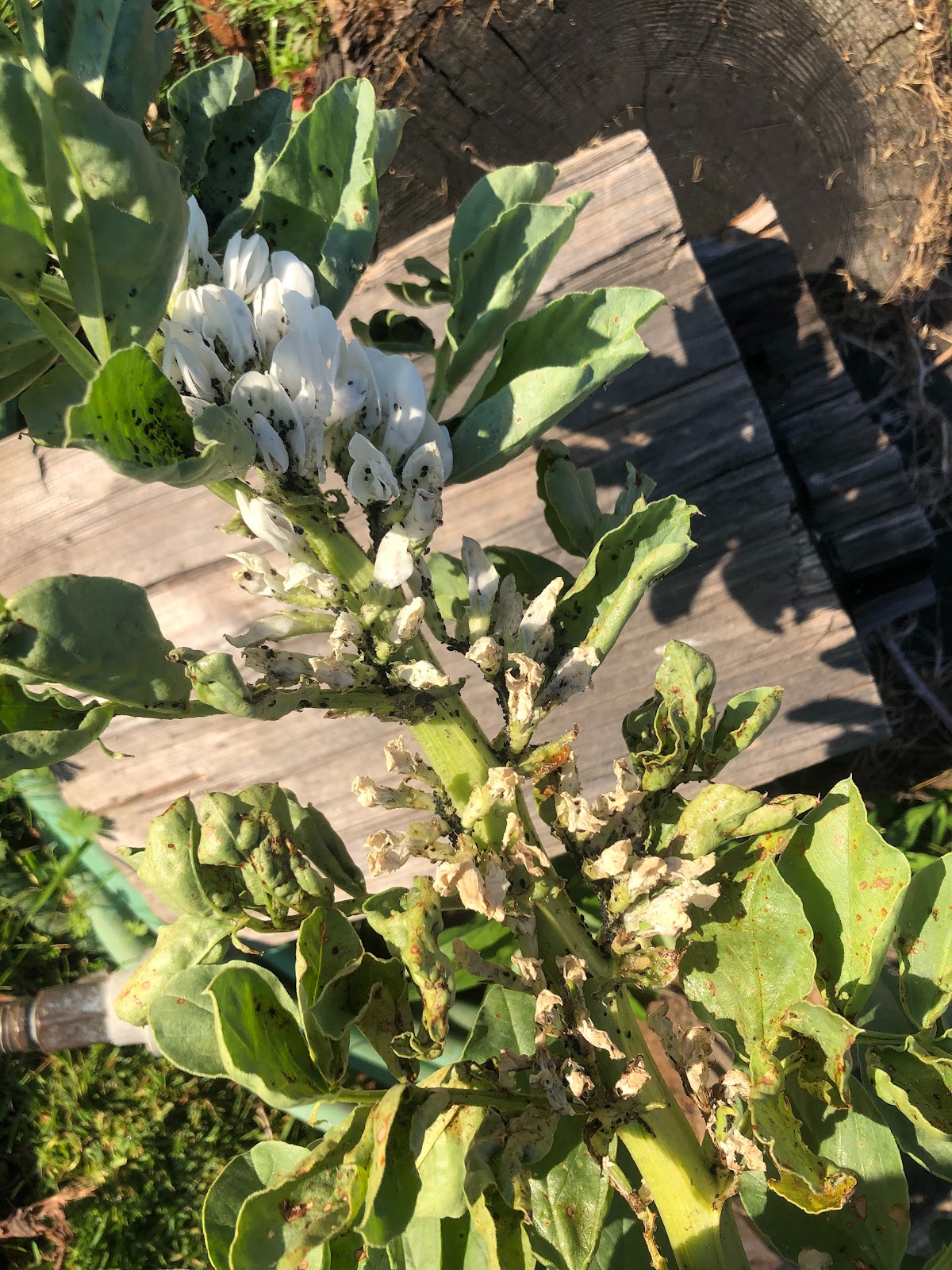
This week on the farm bed A16 had an aphid infestation on are fava beans. To clear the infestation,
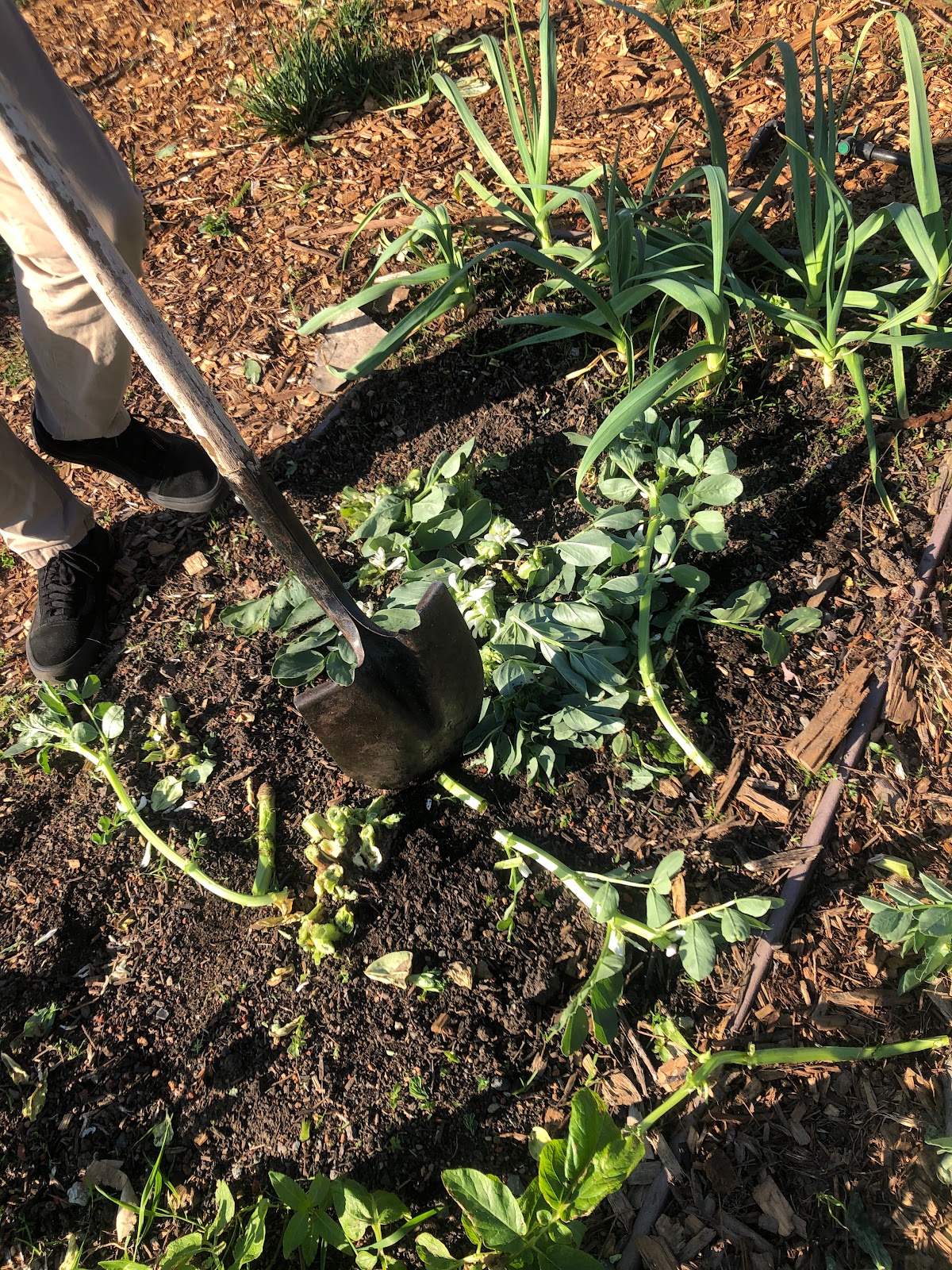
we ended up clearing all the beans and composted the main infested crops and used the cleaner cover crops for green mulching. Mulch is any material that is spread or laid over the surface of the soil as a covering. It is used to retain moisture in the soil, suppress weeds, keep the soil cool, and increase the organic matter in the soil. As a legume, fava beans fix nitrogen in the soil and by using the method of green mulching. To do this we first cleared the fava beans and use the more cleaner crops (without aphids) for mulching. We cleared the weeds and places the beans on the soil and using a spade shovel we chopped the crop up to spread it out. We then layered the mulch with a light layer of compost soil and watered. Organic mulch will break down over time and lose most of its benefits over time.
we ended up clearing all the beans and composted the main infested crops and used the cleaner cover crops for green mulching. Mulch is any material that is spread or laid over the surface of the soil as a covering. It is used to retain moisture in the soil, suppress weeds, keep the soil cool, and increase the organic matter in the soil. As a legume, fava beans fix nitrogen in the soil and by using the method of green mulching. To do this we first cleared the fava beans and use the more cleaner crops (without aphids) for mulching. We cleared the weeds and places the beans on the soil and using a spade shovel we chopped the crop up to spread it out. We then layered the mulch with a light layer of compost soil and watered. Organic mulch will break down over time and lose most of its benefits over time.
Food Unit
In class lately, we have been focusing on food. We recently completed food reports. These included a range of information, mainly focusing on the agricultural and industrial production of various foods. These reports showed us the total "cost" of the growing, processing, packaging, and transportation of certain foods. From here, we could gauge the overall consumption and production cost of the food, and mainly the impact and implications it has on the environment. These reports showed us just how much energy and resources go into making even the smallest snack foods. We also learned about fermentation, its key principles, and its benefits. Fermentation allows for food to be kept and stored for longer periods of time, using enzymes and bacteria to do so.


-Kayla Bennett


Subscribe to:
Posts (Atom)