Tuesday, November 7, 2017

Planting


On the farm, my group and I are planting lettuce and tomatoes.  These are organic starts that come in flats of separate plant compartments that we pick out from the flats.  In order to plant them, we have to first figure out the layout in the garden.  We use a board with pegs sticking out of it at the correct spacing which gives us a template of the pattern that we will plant in.  We press the template into the dirt and when we lift it up it gives us the places to put the little plant starts.  We use that template to make sure that the plants won't be overlapping, because they will destroy each other by competing for light and water.  Keeping them spaced gives them all a better chance of survival.

After the spacing is laid out, we put individual plant starts into each of the holes.  We then get new soil from the compost pile and add that to the new plants because that's the food they need in order to get started growing in the ground.  The last step is to water them and then let them be.  After the planting is done, I am also part of the clean-up crew that makes sure all of the tools are back in place.  I also make sure they are clean and dry, so the next class can use them and so they won't get rusty.  Planting involves a lot more than just poking a plant into the ground; once the plants start to grow, we will take time to aerate the soil and make sure there are no weeds, but for now, our work is done.

Mike B

The Marsh vs The Farm

This week on the farm we took a trip to the marsh, sat there for about 20 minutes listening to the birds, bees and the wind brushing through the grass. During this time we observed everything the eye could see. Took notes on how many animals we saw, or type of grass, anything really. The marsh was a very relaxing place to sit and think too. A task that Mr. Stewart gave to us was to draw a map of what we see. After we did that we walked back to the farm and sat at the top of the hill overlooking it almost and did the same thing, take notes on what we see. We then compared what type of animals and plants we see on the farm vs the marsh. Then compared the maps that we drew of each location. Something I notice was that more animals were at the marsh and there were less weeds at the farm. 


Kelsey Siegel 


Socratic seminar


This week in sustainable agriculture we had a Socratic seminar. I was not looking forward to it because of my lack of organization, which made preparing for the seminar very difficult. Also, I generally don't like having conversations with people about topics I don't feel prepared for while being watched by other students. However, this Socratic seminar was the best one I've ever been in.
Usually, their are a few students who come into the Socratic seminar unprepared, resulting in a slow-paced discussion between the people who are prepared, which doesn't really go anywhere because they run out of things to discuss too fast. I was unprepared during the seminar but I was able to add on to the discussion just fine because I was able to apply what I learned from working on the farm into the discussion. When the question came up asking 'why soil erosion and soil fertility are major concerns for agriculture and the environment' I knew what to say during the seminar because I'd dealt with these problems at the farm. I knew that in order to solve these issues grass and shrubs had to be planted, mulch had to be added, drainage had to be improved, and the soil had to be loose because I had seen and done those things for the past three months. I'm not saying you don't have to study, I definitely would've done a lot better if I had. And if it weren't  Mr. Stewart teaching in the classroom I wouldn't have been able to connect the work I had done at the farm to the question asked. What I'm saying is that the work that I have done on the farm has given me a greater knowledge of agriculture that I can now apply to the classroom.

Tomas

Monday, October 30, 2017

The Farm's Impacts on Mental Health


     A few months into sustainable agriculture and I have noticed that everyday after class I am always feeling happy and refreshed. So, I thought it would be interesting to see if this was true for the rest of the class. How does working on the farm impact our mental health?
     Personally for me, the farm helps me relieve my stress during the school day. After sitting in classrooms all day worrying about tests and grades, it's great to take a break and be outside to focus on taking care of the farm and our beds. Simple acts such as planting seedlings or weeding my bed make me feel so much calmer. Grace Willens, a sustainable agriculture student, agrees that the farm helps her de-stress, "being out on the farm helps me relax in between classes." Zoe Stakowski appreciates how the farm offers a hands on learning environment, outside of the classroom, "The farm gives our minds a break from the stress of school, even though we are still learning!" Sam Jackson further proves my notions  by stating, "I love being outside for a period everyday. It is a nice regeneration time and is fun to work on something that you can see improve over time."
Scientific research also reinforces my notion. "Gardening shows us that we are but a small part of nature, and getting over such feelings of insularity and self-­absorption is an automatic antidepressant," says Malati Jagasia, a child psychologist based in Mumbai.
Overall, I think it's clear that being on the farm is quite beneficial both so our education and our mental health.
So with that, thank you Sustainable Agriculture!
 - Ines S


Glow up


The RHS farm has undergone some changes the are making the farm really glow-up. This past week we did quite the revamp of two beds that had not been touched since last year and we cleaned up the some of the surrounding area of the farm. With this being our first full week in a while, we had more time than we were used to in order to perform this glow-up. The class put some work into our new maintenance jobs (water, compost, maintenance, and companions.) Each having their own special set of responsibilities on the farm. My group is companions this time around and we were quite busy clearing out the weeds on the outside border of the farm as well those surrounding the few precious grape vines we have. 
    To add to the glow-up of the farm we revamped two forgotten beds adjacent to each other. These were wasted space which can't be afforded on such a small farm. So Mr. Stewart assessed us on how well we could bring them back to life. We had to weed the beds meticulously and continued to use a U-bar to aerate the soil. Next, we used an 8-inch dibble board to determine where each lettuce seedling would be planted. When planting we had to be very careful to allow the roots to be fully extended once in the ground to ensure good results from them. 
At the end of the week we had two new beds on their way to success and some good lookin' grape vines!


Sam Jackson :)


Last Week


This week block day was very busy with painting signs for the browns and sticks piles in the garden, as well as the lid for the amendments bin. Due to the composting area being moved across the farm to next to the hoop house a few weeks back, the farm was in need of some new signs to make the farm easier to navigate, and the signs will also be easy to spot for newcomers to the farm, and for those of us used to the old layout of the farm.

Other students also started to plant seedlings into 6-section carriers, and worked on building up the compost pile. Lauren and I picked up the compost from the CEA, who were happy with our arrival to take the compost out to the farm. Our beds also needed some maintenance with some weeding as well as adding some nutrients to the soil as a result of the soil tests that we finished a week ago.

On Monday and Tuesday, we worked on a lot of review for the upcoming midterm and seminar on Monday and Tuesday of next week, as well as going over the compost reading log that we finished for Tuesday's class.

Micaela W.


Dana on the Farm


Dana N. on the Farm
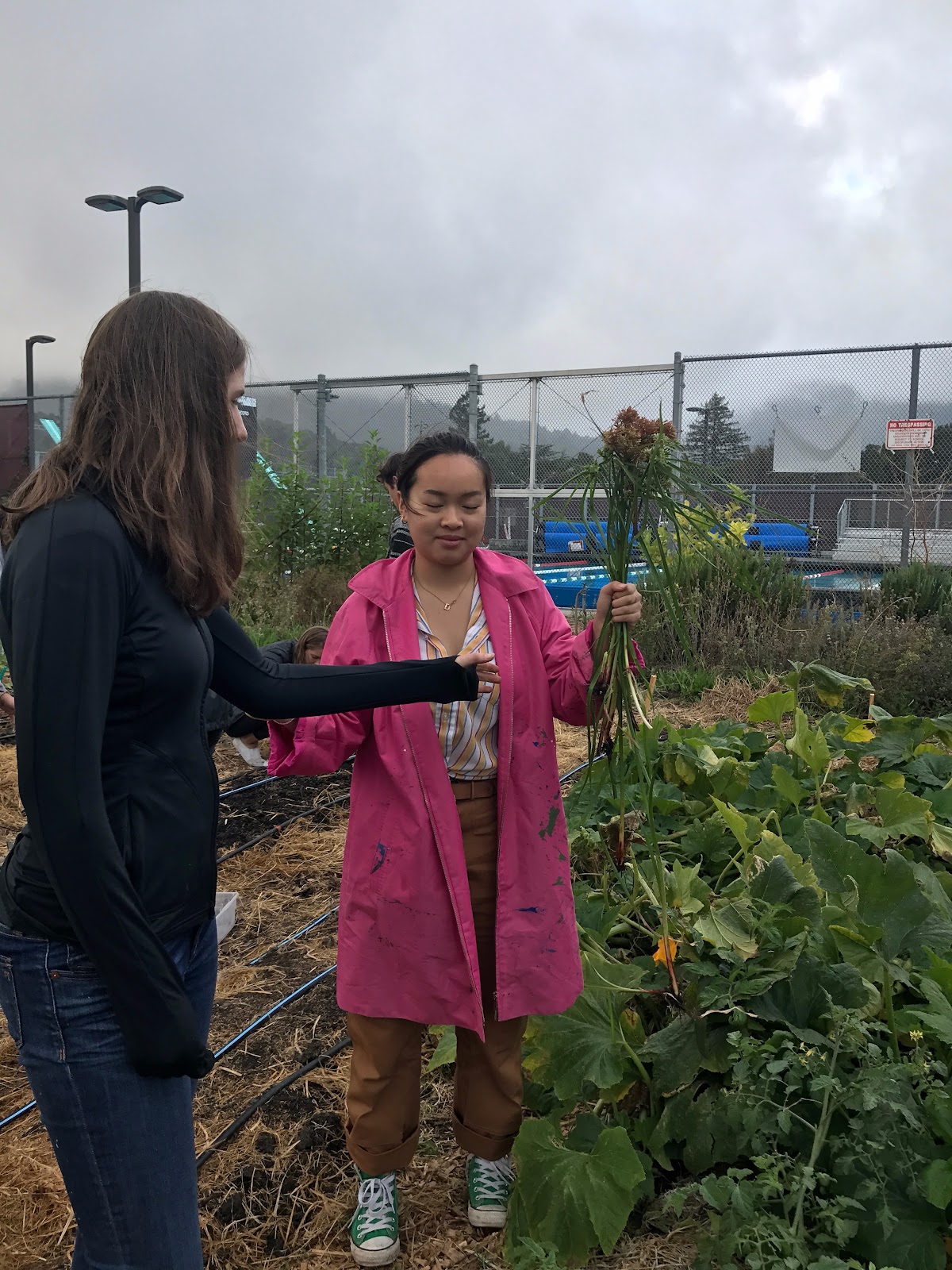
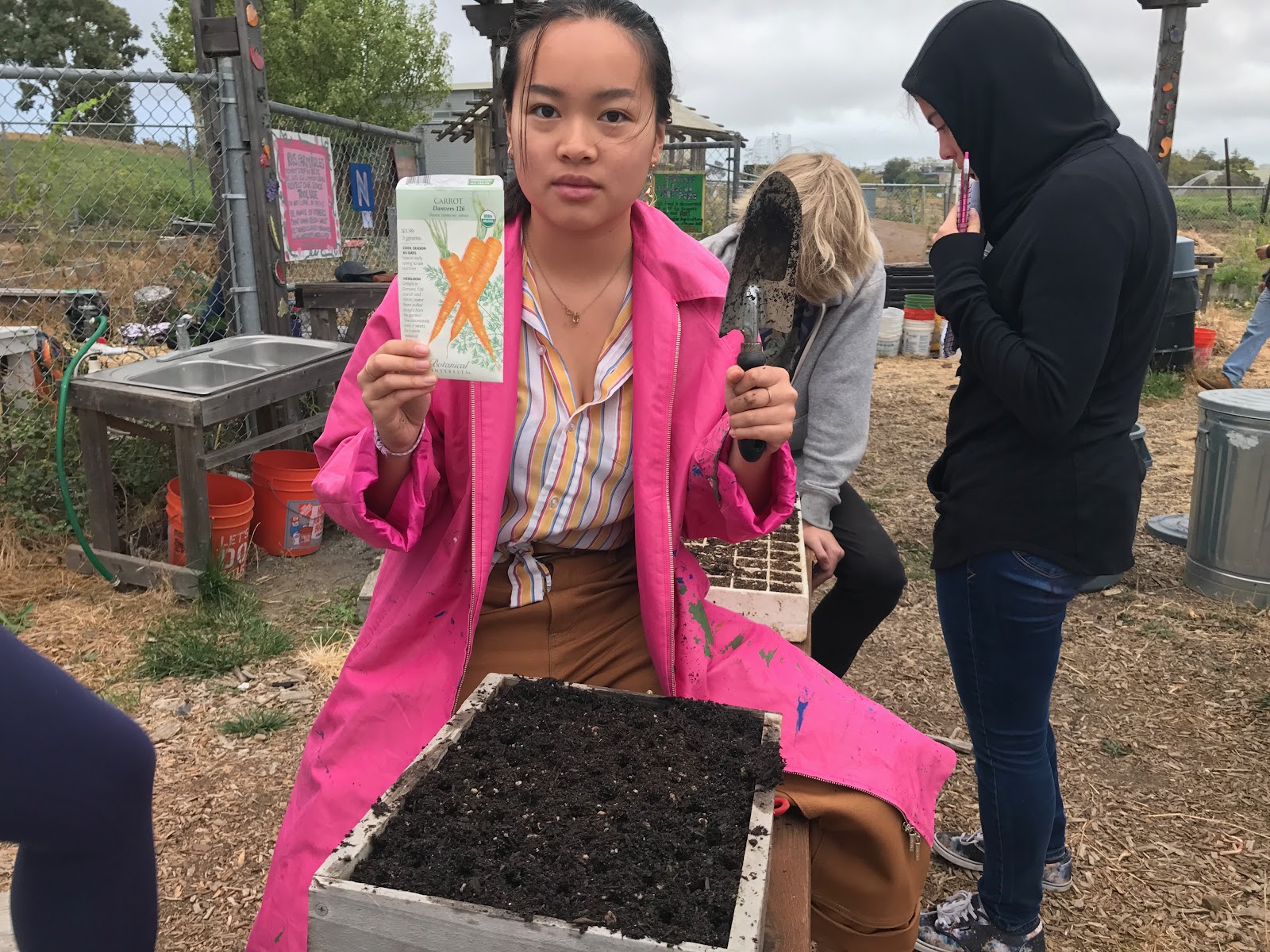
Just like other students in the fourth-period Sustainable agriculture, Dana is a really hard worker. Whenever she steps into the gates she is in her farm clothes, overalls, and closed toe shoes, and she is ready to work. "I'm always prepared and excited to start a new day in the garden." She helps the farm by weeding,
Watering,
Planting,
And harvesting.
Dana got her love for being in the garden after spending time at Oxbow Boarding School's garden of inspiration. She has taken that love into caring for our redwood farm. She is especially good at weeding, which comes in handy with her group's bed because it seems to always have weeds that need to be taken out. Dana also loves to use foods from the farm in her own kitchen, once recipe that she is particularly proud of is for baked squash. Dana is looking forward to spending the rest of her senior year continuing to do more hard work on the farm.

Anna Kaufman