Thursday, October 26, 2017

A Great Week on the Farm

We have a seminar and midterm coming up so we focused on doing that in class on Monday and Tuesday. In the farm this week we got to add amendments to our beds. Last week we did squeeze, shake, and chemical tests using soil from our beds to determine how many lbs of amendment we had to add. After doing these tests and calculations, we determined that we had to add about 1.5-2 lbs of amendment. We used Phyto Grow which has Nitrogen, Phosphorous and Potassium in it. I am really excited to see how this affects our plants and if they grow any stronger and faster than they were before. My one bed had a huge tomato plant in it and we decided to take it out today so that cleared up a ton of space in our bed. We also harvested a really nice rutabaga from our bed! Mr. Stewart really wanted us to use up all the bell bean seeds so we planted a lot of those in the space we had after taking out the tomato plant. Bell beans are about ½ inch thick so we planted them a ½ deep into the ground because you are supposed to plant seeds as deep as they are thick. I am in the watering group, so after planting the bell beans I watered a couple trees that border the farm and watered my bed a lot. It has been super hot lately so we are going to have to make sure our newly planted bell beans get enough water. It was a pretty great week in sust ag!

Grace Willens


Friday, October 20, 2017

New Bed


This week students focused on clearing space for a new RHS farm bed. This new bed was to come from the space previously taken by the compost piles. The current compost piles were moved to the back of the farm, against the northern facing side of the hoop house.h With the relocation of all but the September compost pile to deeper within the farm will allow for approximately 300 new square feet of previously not used planting area. With this move came the reminder that the farm was placed over an old parking lot. This became apparent when students started hitting large chunks of concrete approximately 8 inches into the soil. This fact can be negated with the use of double digging, extra soil, and compost. This will be achieved by double digging the older dirt and placing newer fertilized soil on top to form a convex (bulge) in the bed. This will allow for more depth for plants roots to grow and a less harsh mixture compared to the old dirt that has been compacted from people walking on top for years. This will be a class project over the next few weeks. With the smoke clearing it is looking to be full steam ahead with these new developments.

Kaelin Stock (I'm sorry for the lack of photos)

Thursday, October 19, 2017

First Full Week in A While

This week in Sustainable Agriculture we finished our soil reports, and worked on class beds. On Monday and Tuesday we worked on the soil tests. We finished the shake test, feel test, and chemical tests, and later analyzed the data. My group found that our soil was silty clay loam and had a pH of 6.6. The class data had an average mean pH of 7.2, which was higher than the recommended 6.7pH. We wrote a narrative and summary about our soil test, and handed the assignment in on Wednesday.

On Wednesday block, we worked on class beds and planted transplanted crops. My groups' bed was covered in weeds, so we were assigned an alternate bed named C2. It was covered with a tarp so my group had to roll it up. Under the tarp was a vol, which Luke Zlatunich caught! However it escaped his hands, jumped on another student, and escaped. After this exciting event, we removed the dead grass that had died from being trapped under the tarp. Then, we aerated the soil using a spading fork, and covered the bed with a layer of compost. After, we watered the bed thoroughly, and then began to plant the celery. We used a six inch dibble board for spacing, and planted approximately half the bed with celery. We used a spoon and knife to get the celery and its roots out. We were very careful in not hurting the roots while placing them in the holes. After planting the celery, we watered the bed again to help the celery grow. We had a little time to work on our management jobs after. It was a very productive and educational week in the classroom and on the farm.

Victoria van Pruissen


Monday, October 16, 2017

Soil Report


This week in Sustainable Agriculture we completed a soil report. Day 1 of our report, each bed group received a cup and filled it to the top with a fresh soil sample from their assigned bed, using trowels to avoid tampering and interference. Once all students had their samples taken, we returned to the classroom to assess the composition. We added 20 mL of the soil sample to a 100 mL graduated cylinder and filled the rest with water. Students then covered the graduated cylinder in plastic making a tight seal, placing a hand over the top, and by inverting and shaking the cylinder, mixed the solution well for a few minutes. The graduated cylinders were then left in the classroom undisturbed for two days to let the contents settle out. Using the remaining soil, we executed a texture (feel/squeeze) test by holding a small clump of soil in our hands. Using an eyedropper, we added water to form a ball. 10-15 extra drops of water were then added to create a paste to determine if the soil felt grainy or smooth.
Day 2 of the soil report, we retrieved our graduated cylinders. Once the material in the cylinder had settled out, lines dividing sand, silt, and clay columns (in order from bottom to top) became visible. We then added up the volume of each column and recorded the total volume of the graduated cylinder. Once we had calculated the percent of sand, silt, and clay in the soil sample, we used a textural triangle to determine the texture of the soil. This was the first lab we have done in Sustainable Agriculture this year. Overall this experience was a very informative, hands on activity that taught us a lot about soil composition and how we can maximize plant growth by growing healthy soil.  
Drew J

Smoke Affects Class Time


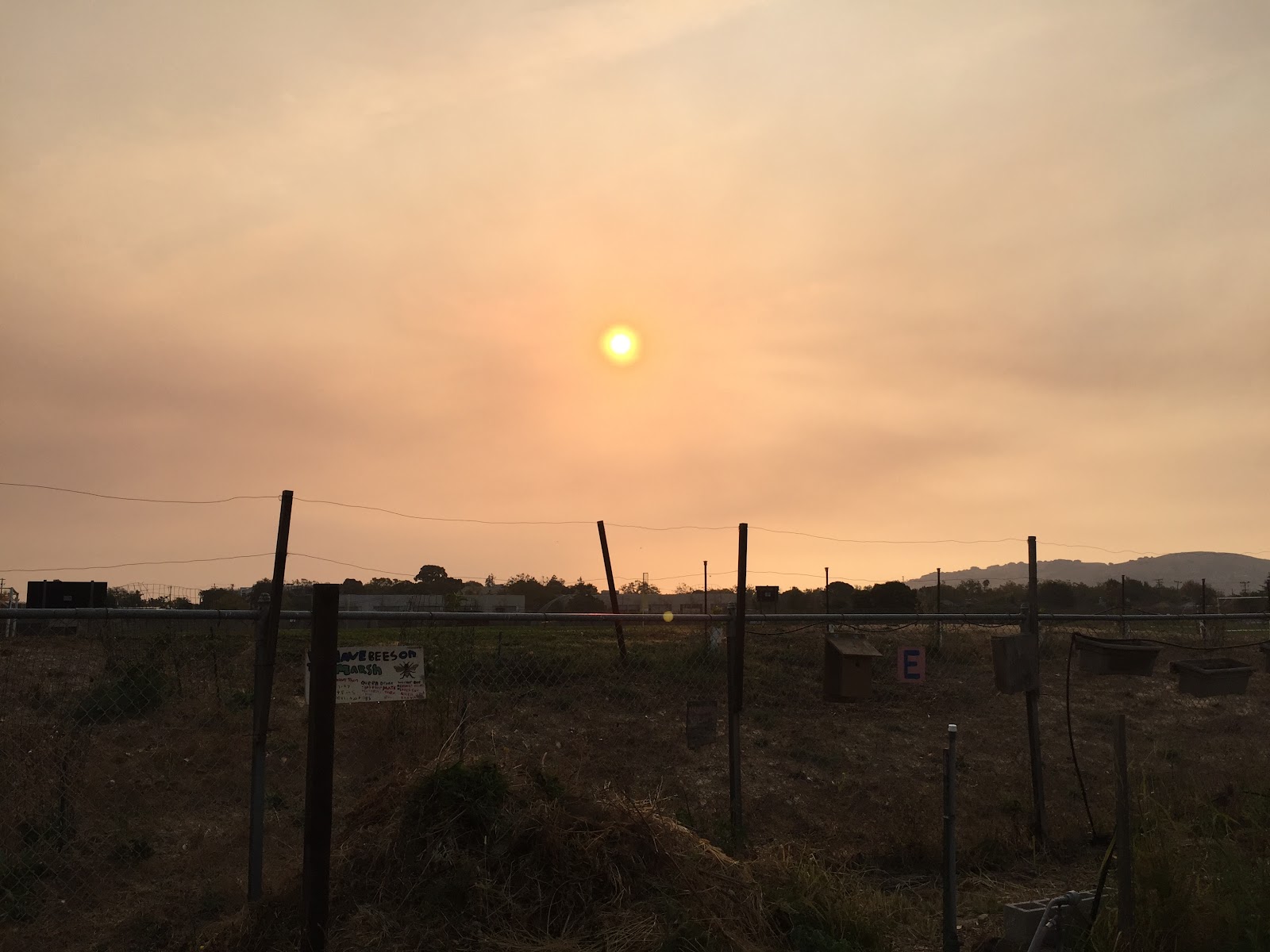
This week in Sustainable Agriculture was heavily impacted by the fires that continue to rage in Northern California. Smoke from the fires have drifted and settled in Marin County and the surrounding areas, causing very unhealthy air pollution and ultimately affecting our time out on the farm. With the continued unhealthy air pollution, the TUHSD decided to cancel school on Friday which further affected our class time.

Despite our limited time on the farm, we did learn important information about how to create compost. Compost is an important organic material that can be added to soil to help plants grow. It acts as a sponge by retaining water which will limit the amount of watering the soil needs. On Wednesday, Mr. Stewart gathered the class to explain how to make compost. Compost consists of four layers: a base made out of branches to create a frame for the compost pile, followed by a layer of browns (dead plant material), then a layer of greens (fruit and vegetable waste), and finally a layer of water. These four layers are then repeated. Additionally, it is important to not include any invasive plants in the browns layer. If these are included, when the compost is spread across the desired area, it is essentially like spreading the invasive species across the area.

IMG_9312.JPGIMG_9313.JPG

Cooper McLay


Blog Post


An Odd Week of Farm Work

This week of farm work included three days instead of two. Although our class beds are important, they only take up about one third of the farm, so we took Tuesday and about half of Wednesday to work on some class beds. The work was labeled as a "pop quiz," we were to weed in and around the beds, as well as lay straw around the plants. Wednesday was difficult as many of the workforce was missing for a field trip in economics. Nevertheless those remaining took to work maintaining the farm. I found my new favorite job, that being weed wacking using a grass whip. The grass whip is a long pole like object with a heavy flat serrated blade attached to the bottom. Using the grass whip involves swinging it from side to side repeatedly. With the daunting task of about three hundred square feet of dense weeds ahead of me and a partner, our use of the grass whip made the job easy. We cleared the weeds in about ten minutes, with ease. The swinging motion and cutting and fast removal of weeds was oddly satisfying, like shaving with a massive razor. We would continue weeding happily for about thirty minutes, clearing much of the farm area of tall weeds. At a certain point we became very tired, unable to swing the grass whips anymore we watered some beds until the end of the period. On Friday, the threat of a school shooting kept many of our class out of school, including myself. Although an odd week, the class was very efficient in preparing the class beds and maintaining the farm.


​
​
Aiden Metzner

Monday, October 9, 2017

Iron Chef - Why?


FullSizeRender.jpgIMG_6014.JPG FullSizeRender.jpg
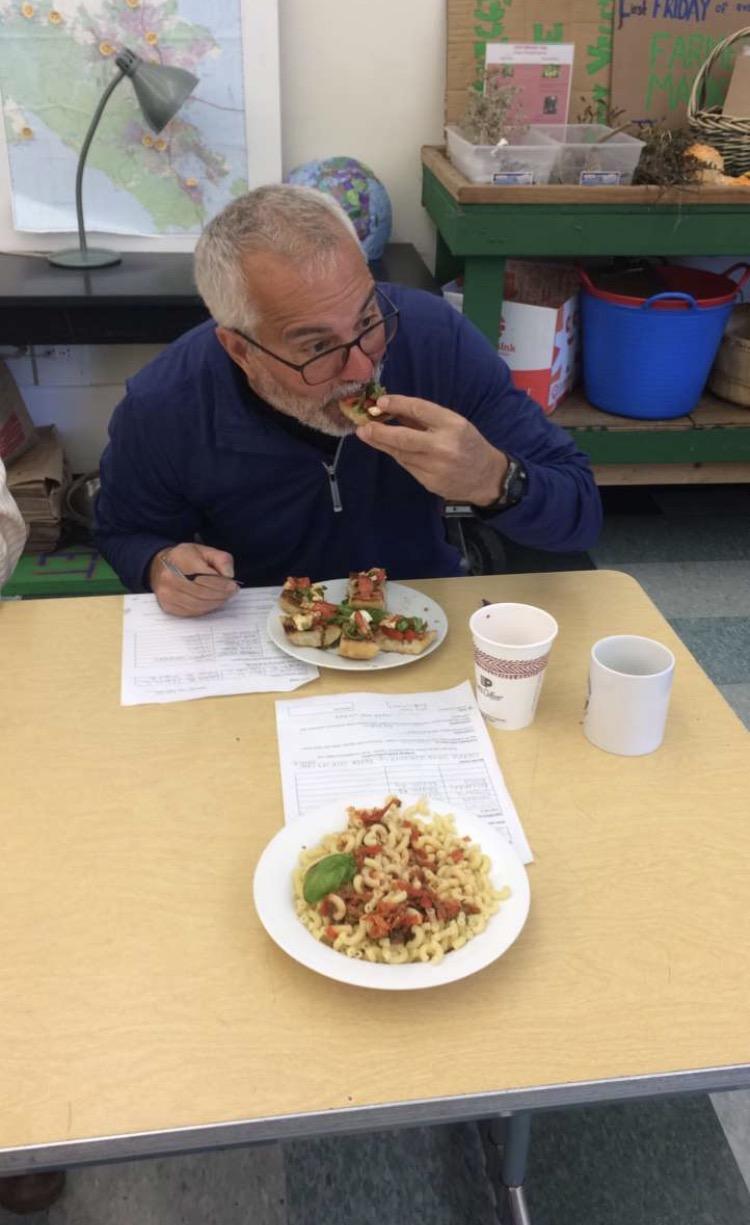
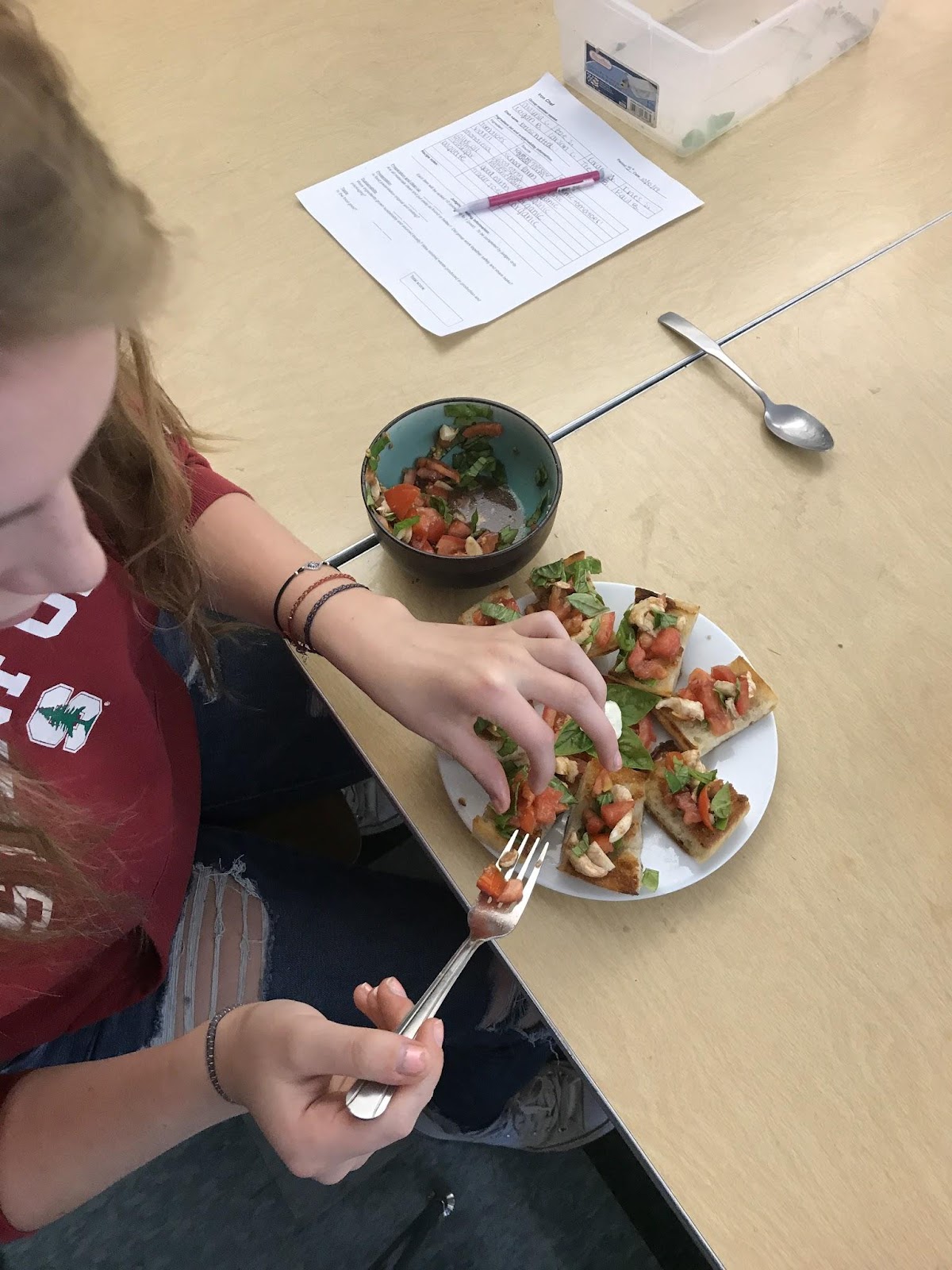
This week in sustainable agriculture, our main focus was realizing the importance of the fresh, organic produce we create on the farm. Our class was told to partner up with another bed group, to work together on the Iron Chef competition. This assignment required our group to use the fresh produce harvested on the farm to create a delicious meal. We decided to make bruschetta, which consisted of tomatoes and basil harvested from the farm, as well as mozzarella, olive oil, vinegar, salt, pepper, and a baguette which were store bought.
Fresh produce is truly more nourishing and satisfying. Grocery stores are filled with fruits, vegetables and herbs that have often been grown hundreds of miles from our kitchen. These plants then have to be packed, shipped, and displayed, which destroys flavor and nutrients. But here on our sustainable farm, food is grown in the purest, freshest form. The food we harvest is not only the most beneficial nutritionally, but it is the tastiest way to enjoy fruits and veggies. When you grow your own food, you know what goes into it: how it's fertilized, whether or not pesticides are used, and overall care. I can now grow organically and eat organically, reducing the size of our carbon footprint. After spending time caring for these plants, I had a deeper appreciation for the meal we created. This taught me the powerful connection between the origin of food to the dinner plate.

Shayna Cohen