Tuesday, September 26, 2017

The Rest of the Farm


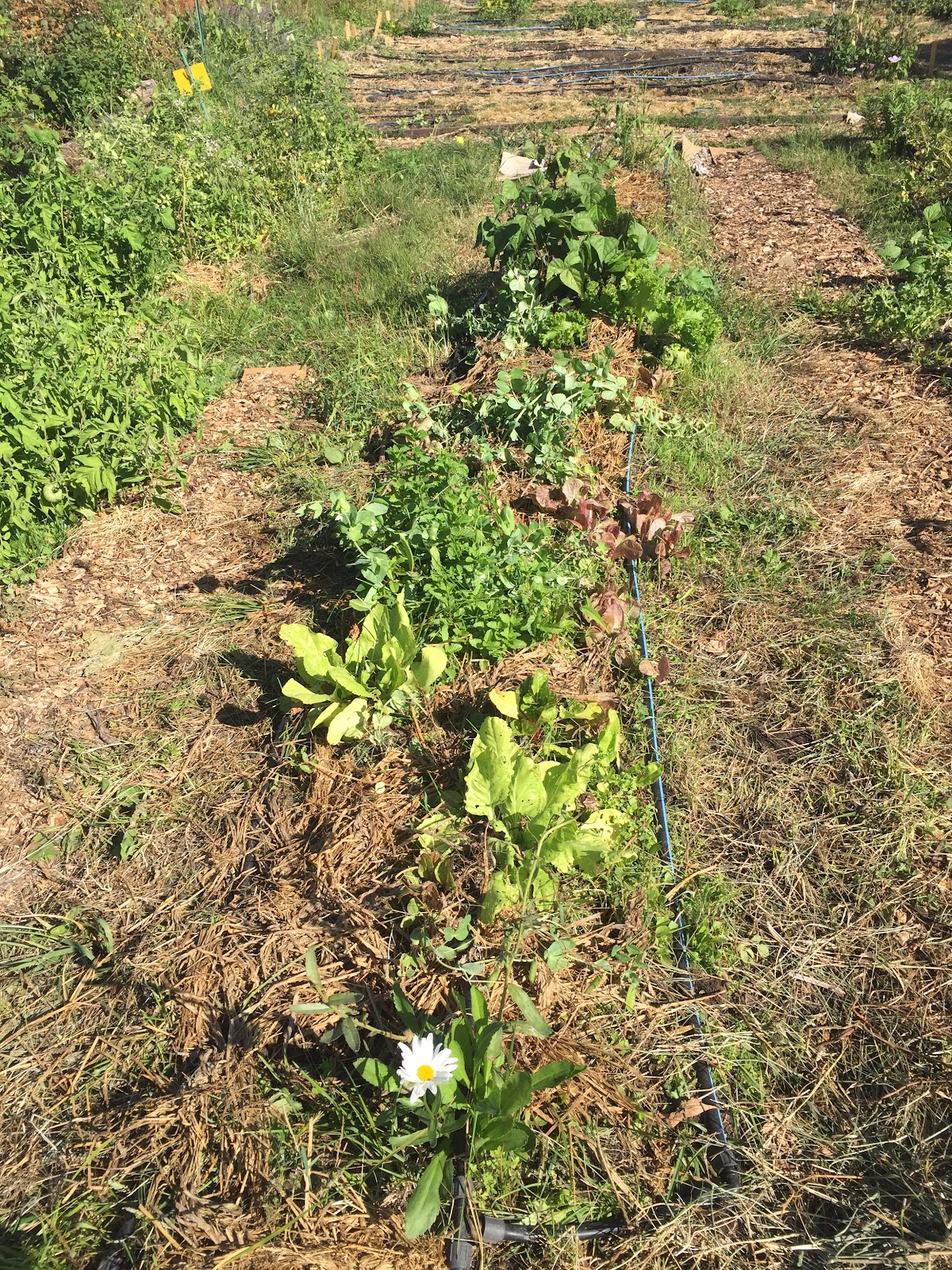
This week in the farm we took a break from working on our individual beds and worked on the rest of the farm. The majority of the class worked on aerating the soil and weeding the beds to keep the already established crops growing while others re-established paths.
We used tools such as a U-bar to aerate the soil to allow the crops to gain as much water and nutrients as possible. Within the bed we hand weeded to ensure we were not damaging the crops. Any loose leaves left behind from weeding were left in the bed to decompose, further enriching the soil with nutrients. Around the beds we mainly weeded large amounts of bermuda grass with sickles to clean up the beds and make room for path restoration.
A small amount of students who were not assigned to restoring the beds were in charge of restoring the paths. Cardboard from bike boxes was recycled to lay down as a base layer on the paths to make them more sturdy and cover wet spots. The cardboard was then covered with wood chips to make the pathways even more sturdy.  Our individual beds are doing great and the rest of the farm is on its way as well.
Reyn R

Farm to Fork

Last week, our Sustainable Agriculture class was assigned to make a recipe or product from ingredients harvested on the farm. There are two recipes due by the end of the semester, each assignment must include a produce list (your ingredients found on the farm), other ingredients, procedures, and photos of your creation.
As we are entering the Autumn harvest, the farm had an abundance of produce available to us including fresh basil, catnip, lavender, squash, green and red tomatoes, raspberries and strawberries.
This assignment will be useful to our understanding of the seasonal harvest, and choosing organically/ locally sourced sourced foods sustainably. Integrating ingredients depending on their harvest can save us money. Buying food at its peak of supply costs less to farmers to harvest and get into grocery stores. Another plus of purchasing food in season is the food is grown closer to you, limiting the amount of time it can spoil (in flavor and health benefits) on its trip.

By Sophia Comins

Friday, September 22, 2017

Bed Prep


This week on the farm are Sustainable Agriculture class started to re-establish the paths that have been overgrown with weeds. The process of making these paths included cutting a card board box into the dimensions of the path that we were making. If a path was a foot wide then we cut the card board so that it is a foot wide. After, the card board was perfectly laid onto the spot where we wanted the path we then would add a layer of wood chips over the cardboard planks. The paths we made are very nice because it allows for easy mobility throughout the farm without getting mud all over your clothing and shoes. We still have more paths to finish, but we have made a great start.


This week we also put in our seedlings that we planted into flats earlier in the school year. When planting our seedlings we had to be very careful not to "J" their roots when we transplanted them into the beds. When you "J" the seedlings root that means that the roots are scrunched up when you transplant the seedling. When transplanting seedling it is important to be as delicate as possible with their roots and not disrupt them. We transplanted the seedlings into our with their roots straight and then watered them thoroughly as possible after the transplant. We then moved onto planting seeds straight into our bed. We planted some turnips and potatoes. When planting seeds we made sure that we covered the seeds only the length of that seed deep. This makes it easier for the plant to emerge and gain access to more energy; the sun. The same concept is used for planting a half a potato. The one difference with the potato is make sure one of the eye's of the potato is facing towards the sun. This also makes it easier for the plant to start growing. Overall it was a great week out on the farm and a lot was accomplished.


-Josh D

Crazy week

Last week we planted seedlings in our beds which means we have been watering a lot more than usual. This is because the early plants need a lot of water in their roots to be able to go through the process of photosynthesis. My group planted broccoli, bell beans, turnips, and potatoes. I can't wait to see them grow!

This week was a bit crazy with the whole bomb threat, which meant we only had one day out on the farm. In which we had a pop quiz. The quiz was to prepare a bed, by weeding, aerating, covering and watering. First we were assigned a bed at random. Then we were told we had about 40 minutes to complete preparation. My group first went to get tools and gloves. We weeded for the majority of the time, with a sickle and gloves, while carefully working around the already grow and very alive plants. Once we were done weeding we put them all into buckets to be weighed. After they were weighed and recorded they were put into the browns pile to be used as compost. After weeding, we used a U-Bar to aerate the soil, instead of doing a full double dig. Aerating is to open up the soil so when new plants are put into the ground they can grow as deep as they need to. Once the soil was aerated it was very vulnerable, which is why we then covered it with straw for protection. Lastly we watered the now prepared bed.

-Raya Corren
IMG_0596.JPG


Dig Deep for Roots

The week of September 18 was both hectic and exciting. As well as rosh hashanah scheduling we also had a lock down, changing our farm work time. Therefore the majority of harvesting happened on Wednesday block. Despite all of the school's challenges, our harvest was diverse, including potatoes, strawberries, mint and tomatoes. By harvesting this week we saved our crop from spoiling in particular our strawberries.

In class on Wednesday we were assigned a pop quiz utilizing all of our acquired skills from our one bed projects for example aerating the soil using a U-Bar is important because it breaks up the soil allowing the plant's roots better soil penetration. This extra root penetration is important because the roots will go deeper which will allow the plants to grow more extensively because it can find more water and nutrients. With the water that the plants discover the students can provide a more sustainable environment for the bio intensive farm because less water is needed. The deeper the plant's roots go the less the farmer has to water allowing the farmer more time to spend on other projects like we did on block day, including harvesting watermelons.

In class we tried a watermelon that was white inside. This is called a White Wonder Watermelon. The fruit is still green with dark streaks and about the size of a icebox. The harvest of 3-10 lbs watermelon's season is now in the indegious region South Africa. Apparently it takes about 80 days to grow. An expert said " When a watermelon is ripe it will break easily from the vine when twisted. If you try to pick a melon and it fails to twist off easily, it probably isn't ripe yet. Another sign of ripeness is when the underside changes from white to pale yellow." about how to tell when a watermelon is ripe.

Overall the harvest day was successful and exciting.


--
Skylar F. Vos

Monday, September 18, 2017

Transplanting

By: Audrey P

This week on the farm, much was done! We kicked off the fall planting season by planting many transplants into the A beds. Crops such as radish, kale, potatoes, and rye will all hopefully be thriving and producing soon!

We transplanted seedlings from flats that were planted in advance. By initially planting seeds in flats, we are able to manage water usage, select the healthiest seedlings to plant, and prevent pests from inhibiting growth. We also can control light exposure and weather because the flats can easily be moved around inside and outside. 

When planting, we use intensive planting to maximize the space available, minimize weeds, and save labor. This is done by using dibble boards or hand spacers that are the length of the appropriate spacing. 

We will continue to tend to the new A bed crops by watering, weeding, and using compost when necessary.  


Sheet Mulching

By Tommy F

This week on Friday we sheet mulched paths on the farm.  Sheet mulching is an organic way to clean up overgrown or flooded pathways on a farm or garden. Cardboard is layed down and bark chips are poured on top of it. The cardboard eventually biodegrades along with the bark chips so it is a natural way to kill weeds and create pathways without putting any harmful materials or chemicals in the environement.