Monday, September 18, 2017

Sheet Mulching

By Tommy F

This week on Friday we sheet mulched paths on the farm.  Sheet mulching is an organic way to clean up overgrown or flooded pathways on a farm or garden. Cardboard is layed down and bark chips are poured on top of it. The cardboard eventually biodegrades along with the bark chips so it is a natural way to kill weeds and create pathways without putting any harmful materials or chemicals in the environement. 


Thursday, September 14, 2017

SustAg and Economics

This week at the farm our beds were finally ready to plant in, management jobs were introduced, and both classes got a visit from Mr. Kelemen's economic class. The purpose of the visits were so that the SAGE program could be involved in both the classroom environment and the Redwood farm. This week in economics Mr. Kelemen assigned a project where Mr. Stewart has hired us to act as Economic Consultants to advise the Sustainable Agriculture class on how to most efficiently maximize the economic potential of the Redwood High School Sustainable Farm. The proposals our groups need to present should address the  what to grow, how to grow it and how to use/sell it questions. 

Essentially the goal is to come up with sustainable ways to maximize the space and use of the farm but also create profit and awareness. The SAGE program stands for Sustainable Agriculture, Government, and Economics and it is new this year to Redwood. Taking these classes in reference to each other promotes the idea of sustainability as a whole. What I mean by this is that this group of student are going to study and learn how to apply sustainability to the economy, the environment, and the community. 

-Kenzie Slaugh  


Monday, September 11, 2017

Double Dig


By: brian odonnell 

This week in the garden we started by double digging. Double digging is where we dig out a 1 by 3 foot section in our flower bed and move the dirt from that section to the far end of our bed in order to put into the hole that will be there when we are almost finished, then we go back to the original hole and use a spading fork (pitch fork) to break up the dirt in the bottom of the hole. This aerates the soil so that we can grow the soil with bacteria and worms. We found that the bottom of the holes we dug was mostly clay.

When we had finished with that first hole we moved to the section next to it. We dug a second hole next to the first and put that dirt into the first hole we had finished digging.  Next used the spading fork to break up the soil that was still clumpy and  the dirt in the bottom of the hole, and so on until we got to the end where we put in the dirt from the first hole. After the double digging we added some compost, that Mr Stewart ordered, that is supposed to be really good for the soil, plants and microorganisms living in it.

After we double dug and put on the compost we had to put the drip hose on top of it all for watering the ground, although we haven't planted any plants yet. One part of our hose was broken so I had to figure out how to fix it, but I couldn't so I had to ask for help from Mr Stewart and he helped by showing me how to screw it together. After the hose my group had to put hey over everything to keep the ground moist as well as killing off weeds and other unwanted plants, then, when we figured out where the hey actually was, we put it all on and now the garden is ready to be planted.

Friday, September 8, 2017

DOUBLE DIGGING

This week within sustainable agriculture we continued our double digging process. We dug a twelve inch trenches with a spade shovel and loosened the lower part of the trench with our spading fork. The soil that we dug was pushed over to the last trench while keeping the topsoil on top and the lower soil below. Our goal is to keep the same layer of soil, but transfer it to the prior trench and loosen the bottom of the trench to make it suitable for deep root systems. The main purpose of double digging is to introduce aeration, make the soil looser and make suitable drainage environment for the plants.

During the process of double digging and cleaning my groups plant bed we came across Bermuda grass which is an invasive plant that is a common nuisance (see previous entry). Bermuda grass is hard to dispose of, but to eliminate it is best to take out the roots with the plant. We put the Bermuda grass in designated buckets and the plant was taken to the invasive plant area.

After double digging and clearing the unwanted Bermuda grass we put a thin layer of compost over our bed of one to two inches and added straw to maintain the beds moisture. We also added our irrigation.

-Mateo V

Bermuda Grass

Pictured below is a plant known as Bermuda Grass. On the farm, our class has been removing it, along with its roots before planting / double digging. 

Bermuda Grass is classified as an invasive species, meaning is can cause some trouble for native species that we would like to grow on the farm. Invasive species are known for competing with native species and often out-competing them. By removing this specific plant, along with its roots, we eliminate a risk of our crops dying due to a lack of resources and space in the soil. By growing crops without the presence of Bermuda Grass, it is more likely that the crops will receive nutrients and room without high levels of stress. 

Given that our farm at Redwood High School tries to grow food sustainably, a finite amount of resources can be used in the process. Removing invasive species, including but not limited to Bermuda Grass, will help conserve the resources that are being used on the farm because it will require less resources to grow the same amount of food. I hoping that by removing all of this grass (several pounds from my designated bed alone), the crops that we grow will not be as restricted. 

After having removed most of it, our group decided that we could begin to double dig without including too much of of this invasive species in our soil.

-Michael Ritter

Tuesday, September 5, 2017

A Day in the Life of the Farm

On the RHS farm, lots of work needed to be done. We started off with weeding the A beds- lots of work needed to be done to keep the beds in good shape. The sickles kept in the shed came into great use that day. The squash bed seemed to overflow into three surrounding beds, causing a harder time for some groups. But, we persisted and managed to clear all harmful weeds. Despite the strong heat beating down on the farmers, everyone seemed to have a good time helping take out the invasive specie. The heat at 101 hit us hard, though, causing us to sweat as we worked and to really appreciate the water kept on the farm.
We also spent lots of time double-digging our beds. In groups of three of four, we slowly made our way digging across the beds with our spade shovels and hand weeders to break up any dry dirt. Digging was a little hard: the soil was dry and hadn't been in too much use. But, we managed to get to the wetter part of the dirt and dig our way across.
We saw lots of growth in both the A and P beds: squash, strawberries, lavender, and many more plants were put out for the first sustag sale in front of the school. The farmers selling the product after school worked hard to explain our sustainable farming methods to buyers and to sell everything we had. Overall, we had a good first week on the farm and I think I speak for all of us when I say we're excited to see what this school year brings.

Addie K


Friday, June 2, 2017

Final week of sust ag

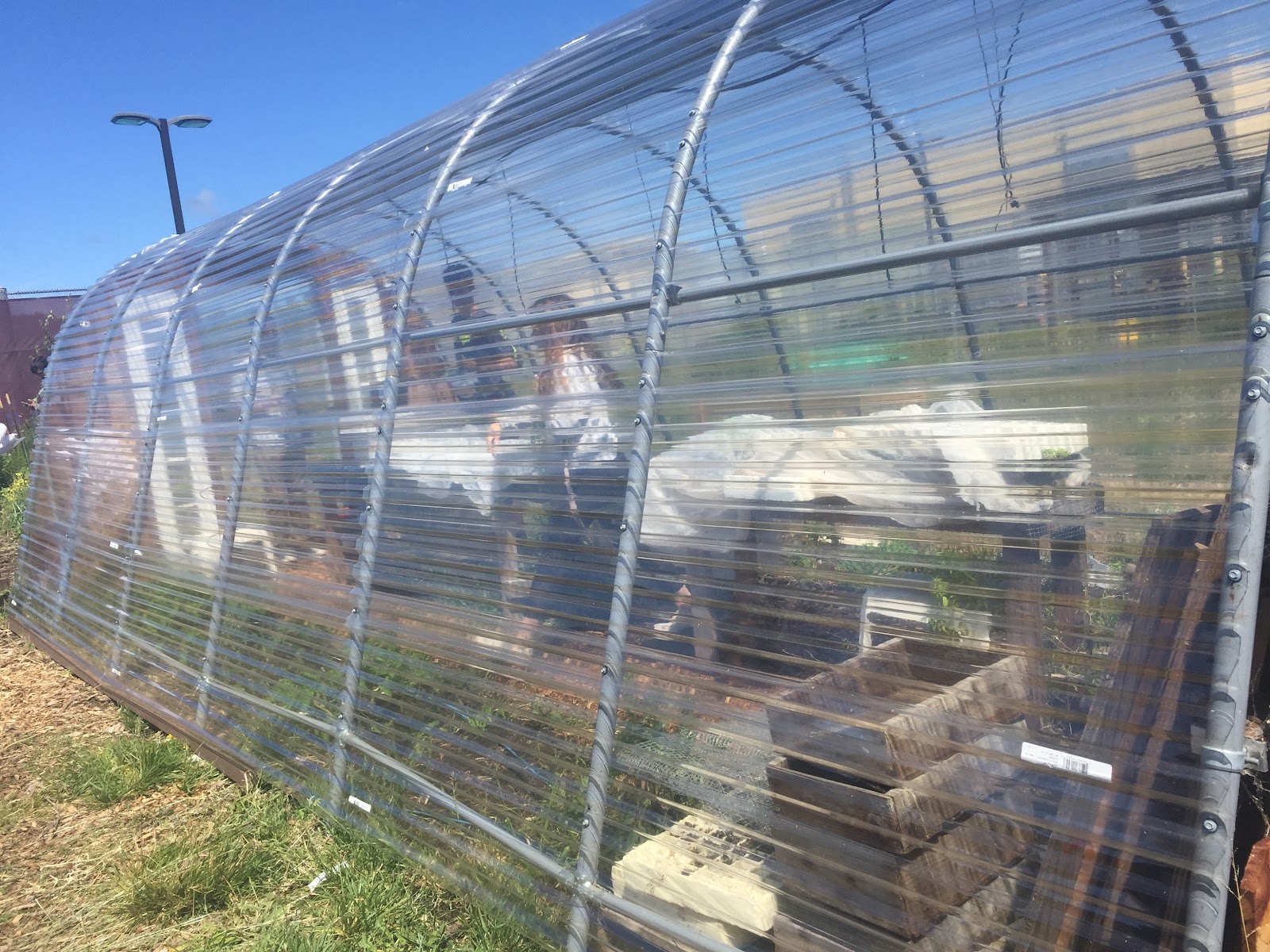
This week we had a lot going on on the farm. The sustainable agriculture students finished their final projects and they got a chance to present them on the farm. As a final project signs were put up at each row of beds to indicate the names of each row of beds. A beautiful mural was painted on the shed to represent sustainable agriculture at Redwood high school and the growing seasons. The hoop house got remodels to be more sustainable. A vineyard was planted and irrigation was installed along the outer side of the east fence of the farm. A wooden plaque with all the sustainable agriculture students names from this year was put up in the farm. Also the ceramics class put colorful ceramic fruit and vegetable shaped tiles along the pillars of the pergola at the front of the farm for decoration. We also had our last class harvest of lettuce which the sustainable agriculture students took home to their families. This year we put a lot into the farm and we have gotten great results.


Ariella Bellingham