Friday, November 6, 2015

Iron Chef 2

This week in SustAg we had our second Iron Chef competition!!

To start off the day, we went to the farm to harvest a bunch of different plants and vegetables that we would be able to use in our meals. We went all around the farm, going to different beds, seeing what we could use. My group ended up harvesting just about everything, from broccoli leaves to butternut squash. When it came time to prepare our meals, we were so excited! My group made a stir-fry consisting of butternut squash, bell bean leaves, kale, broccoli leaves, tomatoes, basil, and lime. We also made a side salad with a lettuce blend of bell bean leaves, kale, broccoli leaves, and romaine. Then we cut up some pears and sprinkled them along the edge of the salad. We grated some butternut squash and red beets and garnished the salad with those, along with some roasted butternut squash seeds. To top off our salad, we made a dressing out of olive oil, vinegar, lime, and salt and pepper.

According to the judges, our dish wasn't exactly the tastiest, but we ended up winning for our good clean-up skills and our sustainability!! My group has decided that we are going to utilize Maia's chickens, and make a tasty omelette next time!

Below are a few pictures from our Iron Chef competition, and a pretty picture of water droplets on a leaf at the farm!

-Marisa R.


--Marisa R

Bees and More: The Week in Review

This week on the farm we worked on our management jobs and did a special Iron Chef competition. Monday we spent our time in the classroom instead of going to the marsh due to the weather. We were lucky to have David Peterson of the Marin Bee-Keepers association come in and talk to our class about the importance of bees as pollinators. We learned that up to 1/3 of the food we eat us pollinated by honeybees.

Tuesday we spent time choosing our companion report plant or animal and working on our learning report for our 3rd management job. The, on Wednesday, we spent 15 minutes in the farm carefully selecting our sustainable food to use in the Iron Chef completion. My team was a close runner-up, barely defeated by a spicy, zesty Mexican breakfast cooked with 100% organic and sustainable food. We prepared a wonderful, balanced meal with sautéed chard, sweet mashed potatoes, and a nice arugula salad topped with strawberries. On Friday, we will finish up or management jobs for the 3rd rotation and water our one beds.

We were very sustainable on our farm and this week was a great representation of the kinds of food our farm produces and how successful we have become.

-Elly Lundberg, period 6 [editor's note: pictures attached above]

Monday, November 2, 2015

The chicken run

This week on the farm my group spent most of their time on digging holes. The purpose of these holes were to fence off the chickens so the chickens can have room to run around the farm. The holes were for the wooden posts for the fence which might be held in with cement or either wood. The soil I dug up from the holes was put onto the un-elevated ground to make the ground level more even. In order to dig the holes I used either the thin shovel or the turning shovel [auger] which would suck up the soil. We wouldn't use the thicker shovels because they would make the hole to wide. If the hole's were too hard to dig we would soften the soil with water.

Some reasons why we should have chickens are that chickens recycle food and yard waste and turn it into organic soil which is rich in nitrogen. Chickens also eat the insects in the garden which helps the garden. Also insects are healthy for chickens. The chicken run is important for the chickens because then they can run around instead of being made to sit in a chicken coop and this makes the chickens more happy and healthy. The eggs from chickens in chicken runs are more nutritious and tasty.


Blaise Van Brunt

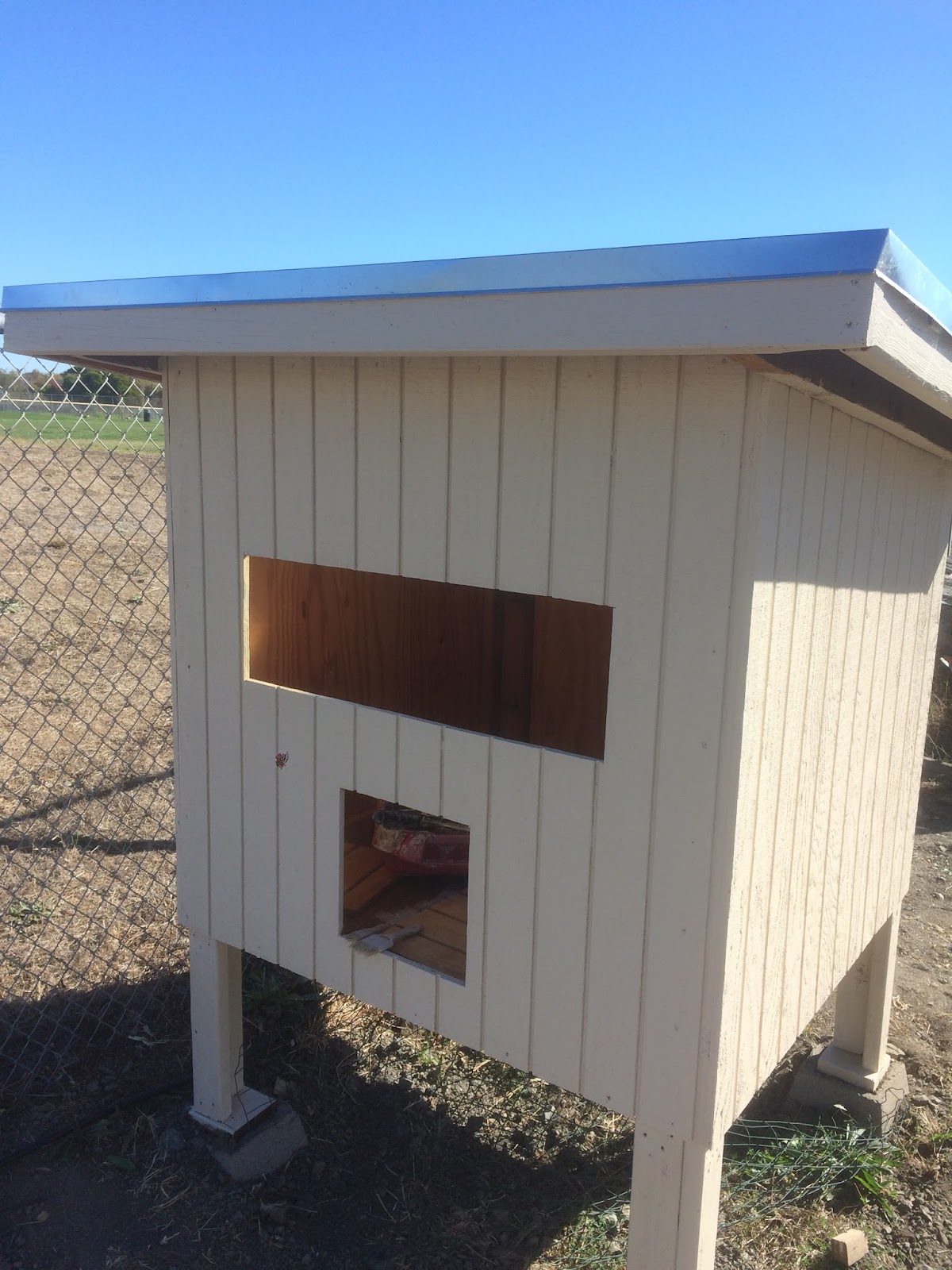
Chicken Coop (follow up picture)


Coop in progress.  --Alex J.IMG_0763.JPG

Friday, October 30, 2015

Another great week

This week was another great week in the classroom and on the farm in sustainable agriculture. We were tested on our knowledge of farm work and planting with a tough test on Tuesday. We also had many interesting discussions on Monday on the many facets of sustainability through water, agriculture and environmental systems as a whole.

On the farm we are making great strides in our year-two students main projects for this semester. Trevor Ryan and I were able to finish priming the chicken coup with its first full coat of paint. We should be able to finish painting soon so it’s ready for the possible El Nino and more importantly, the chickens. Once painting is done we will be able to prep the insides for our four chickens. Our other main project is the pond and at the helm is it's capable captain, Stevie. Wednesday proved fruitful as another good day of digging and shaping took place and we are all looking forward to its aesthetic presence once it's completed.

The main goal of the farm is food, and we are looking to have plenty of it. The one beds are looking very healthy and we are planning to have all sorts of good crops ready for you later next month. Soon it’ll be harvesting time and we will all be chowing down on some locally, sustainably grown produce.

--Alex J. [with edits--see later blog for coop "in progress" picture]

How Sustainable We Are

Gabriel harvesting and showing me how to use clippers!

In Mr. Stewart's classroom, we get down to business. During his presentations, and discussions of organic farming, we mainly focus on being conservative and sustainable in our farm.

He reminds us, that sustainability is enduring long term maintenance of resources and systems; environmentally, economically, and socially. Our class's goal is to maximize the effectiveness of time and space in the smallest- scale growing area. One way we practice sustainability, is by mimicking nature. Students take nature walks to the marsh occasionally to observe the agriculture and compare it to the farm. We evaluate, debate, and conclude best practices in our farm.

Three ways we practice sustainability in the farm is by deep soil preparation, composting, and intensive planting/ spacing. In the beginning stages of our One Bed Projects, to prepare the soil we used a technique called," Double Digging".

Double Digging enhances nutrient availability, holds the water better than compact soils and requires less water. It also improves soil structure minimizing erosion.

Composting doesn't cost as much as chemical fertilizers. It saves resources because it doesn't need as much as chemical fertilizers. Composting improves plant growth and reduces the impact on the environment.

Intensive planting (spacing) gives off a lot of benefits. We plant our seeds efficiently and organize to minimize the space used. Spacing retains more water and soil, and reduces the amount of weeds/ invasive species in the bed.

Sustainable agriculture should be taught everywhere. We are learning how to be conservative and minimize the effects of the drought. Not only are we learning these concepts but we are taking action. Come out on Fridays to our Farmers Market days and support our farm!

--Alex P.


Thursday, October 29, 2015

Seminar and Companions

This week we had a seminar in which we spoke about the meaning of sustainability in relation to agriculture, different planting techniques, how these techniques provide sufficient crop yield and support ecosystems. We also discussed soil erosion and soil fertility, and the impact they have on agriculture and the environment, by using examples from both local and global impacts. Another subject that was discussed was the use of freshwater globally; currently, approximately 70% of global freshwater is used by agriculture. We discussed whether this is how freshwater should be used, whether this amount should be reduced, and how this can be reduced. It also brought up the discussion about who is primarily responsible for water conservation – the farmer or consumer. The next day, as most of you know, we took our first midterm of the year, hopefully everyone did well.
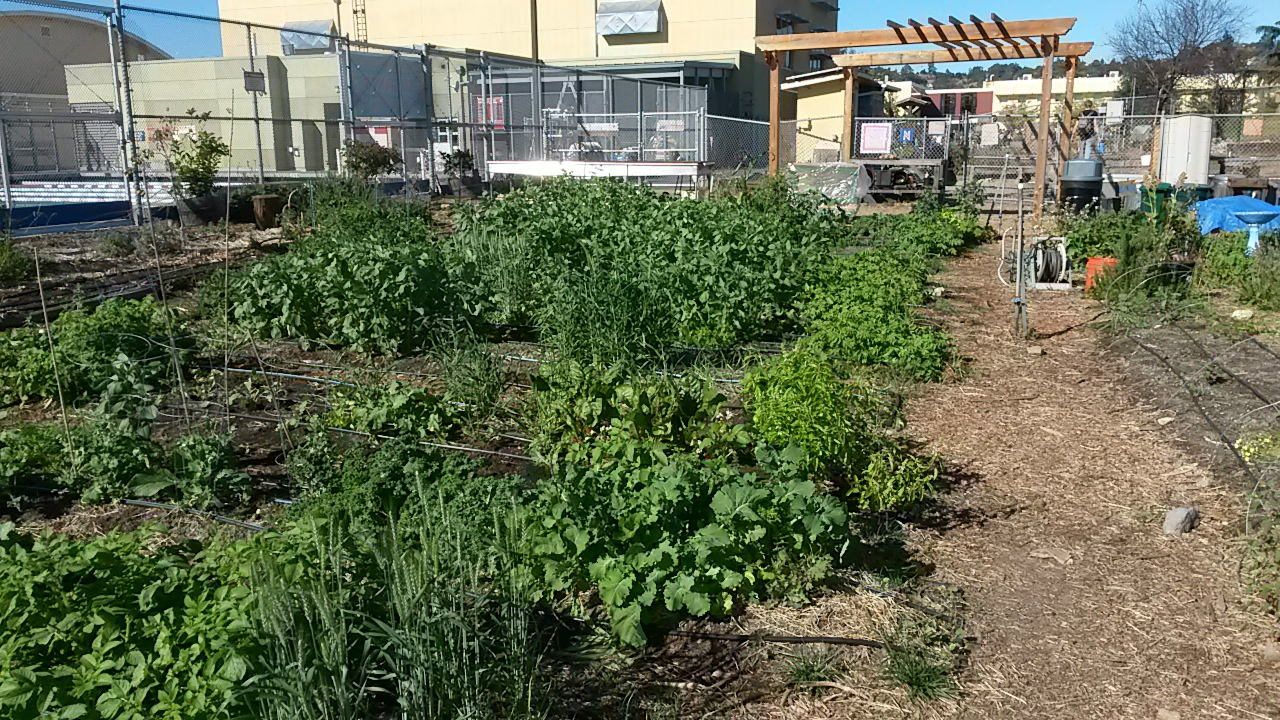
On another note, my group and I began our new management job, which is Companions. So far, we have been weeding the "P" beds and the paths next to them. Such weeds include dandelions and some large bushy/grassy weeds I do not know the name of. We have also identified some companion species such as bees, and have also seen a garden mouse and a hummingbird in the farm. I am also adding a picture of the "A" beds, as they are growing very well. [Editor's note: Also spotted this week: a garden snake, a couple hawks, a sand piper--it's an ecosystem!]


Have a Happy Halloween Everyone!
Jean-Marc Beddow