Monday, May 4, 2015

Market Friday!


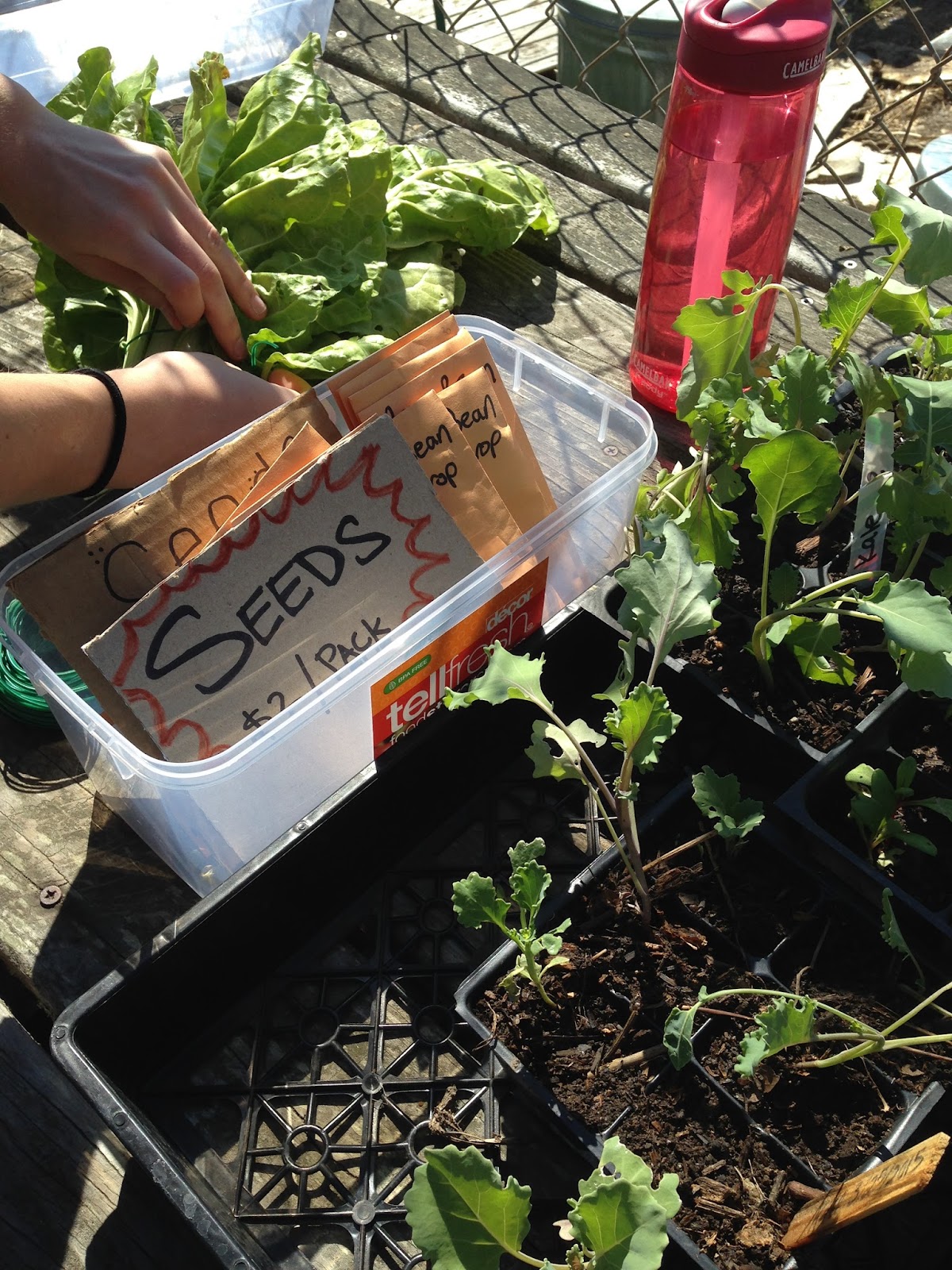
Another successful market! With summer coming around the corner the farm is firing at all cylinders. We had great yields of tasty strawberries, kale, and onions which sold like wildfire. Overall the sustainable agriculture class netted $260 which we plan to use for improving structures on the farm, getting more tools, and much much more. A crucial part of our success was the many signs and announcements posted to the students so they could find the market.To prep for the market the sustag class harvested, washed, and packaged all the produce prior to setting it up for the market .Although a majority of sales came from teachers, another main contributor was parents picking up students. This may lead to another location for a market, in the back lot, where parents gather to pick up their children after school. An important part of our class is to encourage sustainable practices and in selling seedlings and starts to the community we are growing the community's sustainability.

Tom Mason

Thursday, April 30, 2015

Final Projects Begin.

This month included the first work day that the class was able to work on their final projects. These final projects range from a wide variety of projects and internships. We will work on the farm every Wednesday for 7 weeks to complete the final projects. Look for more updates on the blog for others final projects in the weeks to come.
Miles

Friday, April 24, 2015

Aphids: A Powerful Pest

A cabbage plant invested with white aphids
Over the past few months on the Redwood Farm, the main obstacle to achieving a sustainable food system has been pests. The pest causing the most problems has been the aphid, that ranges in size between 1-10 mm, that has proven to be among the most destructive of pests in temperate regions. Here on the farm, it is our goal to create a 100% organic and sustainable food system and that being said that prevents us from using synthetic pesticides. However it is not only because we want to be organic that we do not use pesticides, pesticides have been proven to have a minimal effect on pests and in addition often leads to a loss of soil fertility and soil structure in the future. After our trip to IVC(Indian Valley Campus College) Organic Farm and Garden we noticed they did not have a problem with aphids. After discussing with our guide the IVC Farm uses high pressure hoses to pray the aphids off. Not only is this an effect method that we have started to use at our farm but also it uses water(which plants need anyway) which is a much more efficient pesticide than inorganic synthetic pesticides.  

Wednesday, April 1, 2015

Harvesting for Market Day


photo 1.JPGOn the last Friday of each month, the students from the Sustainable Agriculture class spends the whole class period at the Redwood Farm. Our task, on March 27, was to take all of the crops that were ready to be harvested to sell for the Market Day. Since we have now entered the Spring season, many of the crops have begun to bloom and grow. Each harvest is measured on a special scale where the weight can be measured. The amount of pounds are then recorded on the Harvest Data sheet. All the students were occupied and busy collecting kale, strawberries, onions and much much more!

A few students collected flowers and made flower bouquets which were absolutely beautiful. Onions were collected and filled up two buckets. Kale and chard were harvested and put into bundles.
photo 4.JPG
Starter plants were grown and seeds were collected to be sold for the market. After three months of limited growth at the farm, the month of March surprised us all and hopefully we will receive a lot more crops to harvest over the next months.
photo 2.JPG


Compared to our Winter harvest, many pounds were collected and sold. This month was a success and we made over $150 for the Market Day. 

-Amada Acuache

Tuesday, March 31, 2015

Expanding Our Horizons

Recently, our class had the opportunity to expand our horizons with some learning not just within out own farm, but at other farms as well.  We took a trip down to the Indian Valley campus of Marin Community College to learn a variety of techniques and to have an experience with sustainability on a farm that wasn't our own.  We were shown on this trip that a lot of the practices that we use on our farm isn't exclusive to just us, but are actually widely accepted and utilized practices.

Transplanting to 6-packs
While on the trip, we had the opportunity to learn about and participate in a wide variety of different activities.  We learned how to graft trees, we planted some kale (utilizing and reinforcing the triangulation methods that we use on our farm for proper spacing), and we transferred early starter plants from flats over in to 6-packs for sale.

Overall, the trip was viewed as a wide success.  Everyone I talked to had positive things to say about it.  I wish we could go again, and hope the next class has as good of a time as we did!

A huge thanks to the parents who volunteered to drive us both there and back, as well as everyone at the farm who came out to speak and work with us!

-Steen Lund
Grafted trees ready for sale

Putting in Work

  1. A lot of people see what is produced and accomplished by the Sustag students but, nobody see's how it gets there. Every week on block day the RHS sustag students hit the farm with great spirit and determination to get work done on the farm. The students start by listening to Mr.Stew's reminders of deadlines and what to get done on the day. Students then flee into the farm and hit there one bed's with a flush of water and observe the plants and the progress of their growth. Take PQ by example he comes in and gets his work done determined to further the progress of the farm. There is always something to do on the farm like watering beds, checking for leaks, or my favorite, making new paths on the farm. There are a variety tools in the shed to tackle the farm with, and now you know how the great work is made.      

                    Posted by: Aziz Majid 

Monday, March 30, 2015

Beyond the realm of Redwood farm

On March 10, 2015 the student's of sustainable agriculture got to experience and learn a different aspect of science and mother's nature power. At 8:00 in the morning we all took a trip to the Indian Valley Organic Farm to learn how we can use the basis of science to create the best breed of fruit we enjoy on the daily basis.

John, one of the speakers we had while touring this beautiful farm, showed us how to graft trees, pot them, and plant them. In grafting trees you place the branch align with your diaphragm and shave both sides thin to allow it to fit in the slit you made in another branch of your choice. Once the two branches are together they will get sealed with a tape and planted to allow fusion of both types of trees. When the fusion is successful we harvest it, put it in a seaweed liquid, and potted it in a black bucket.

Along with grafting trees and potting them we also transplanted peppers and learned about the germination process and structures of certain leaves and seeds.

This experience was so great and fun. I wish we could go every month.                                

Signed: Imani Askari 5th period