Tuesday, September 16, 2014

Sustainability For All

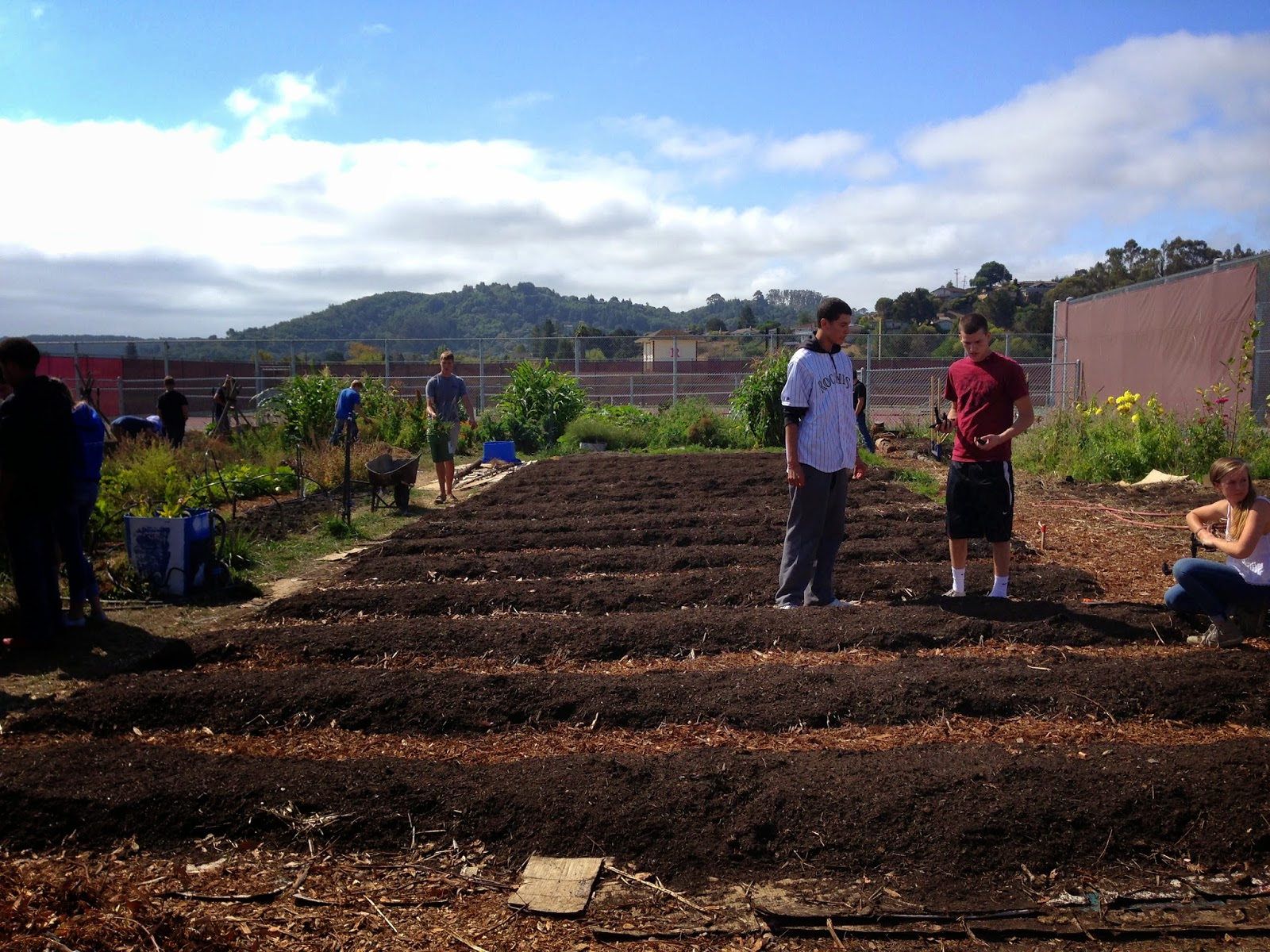
The start of Redwood's Sustainable Agriculture class has been phenomenal. This past week the One Bed Projects were started and it looks like everyone was able to finish planting as well. Thanks to extra volunteers  around the farm we were able to learn about a lot of different planting techniques. For example, we discovered that there are much more efficient ways to plant lettuce (such as to broadcast it) rather than spacing it according to the spacing chart in the back of How To Grow More Vegetables.


In addition to everybody's One Bed Projects, it seems as if everyone has gotten a great start on their management jobs as well. Sammy, who works with Rachael for the Education Department said that they plan to inform the class on quinoa plants as soon as possible. She also informed me that, "you don't have to only eat the quinoa seed, you can eat the plant as well. The leaves are very delicious, actually." How cool! Another person who has done some great work so far is Gabe, who works in the compost department. He talked a little about what he does for his group and said that he collaborates with the weeding group to collect green and brown waste, and then they layer it alternately with other food scraps from the CEA in order to create a productive compost. Overall, everyone is working hard to achieve their goals. On top of everything though, it seems as if we've been able to get some great harvesting done as well. Venezia, who is in the harvest department was able to harvest these beautiful strawberries. It looks like it's going to be a great market day this month! -Rachel Yenofsky

Monday, September 15, 2014

First Week at The RHS Farm

On the first block day of working at the farm there was a lot of work that needed to be done. We had to create new farm beds to grow plants on. We did this by sheet mulching. Sheet mulching is layered mulch system that can suppress weed growth, reduce labor and maintenance costs, improve the soil, and improve the health of the plants. The other thing we did was double dug an existing farm bed. Double digging helps to aerate the soil, helps roots go deeper into the ground, improves soil drainage,  and cycles nutrients to the top so plants can use it. That was what the class did the entire time. On Wednesday September 3rd, the second block day, there was a greater variety of activities that the students could do. There were people doing weeding and filling the paths with wood chips. People were picking tomatoes and weighing other types of food so that people can use them. People were making compost piles which can be used as compost later on. Creating compost is necessary in order to have a sustainable farm. There were some people that were creating a few more beds and double digging those beds as well. The rest of the people were working on their personal beds and that is what has been going on in the first couple of weeks of Sustainable Agriculture.