Monday, October 5, 2020

SustAg FARM during Remote Learning

Hello RHS SustAg Community!

The SustAg Blog has been diminished a bit this year.  Instead of weekly posts, there will only be periodic check-ins.  Instead of required weekly blogs, students will instead have choice regarding their community outreach.  Sometimes, students may choose to blog, but no promises.  Honestly, the blog hasn’t been a huge hit.  If you are looking for current information about the farm or the course, I suppose my website is probably the best bet.

That said, students are working at the farm after school in Covid-safe pods, with facemarks, and at 6’ distance.  We wear gloves and sanitize our tools.  We have been able to get a lot done, prepping and planting about 40 beds in September, with hopes of selling at the SR Civic Center Farmer’s Market on a Sunday in October or November.

Here are some pictures of what we have been doing.  Be well.

Mr. Stewart

Weeding and prep:

Beds prepped!

Planted!

Saturday, May 23, 2020

What I'm Doing


Elena Mesker
25 May 2020

What I'm doing:
Working alongside my mom and stepdad, we compiled a total of almost 3,000 lbs of compost. This extremely rich soil came from West Marin Compost (http://westmarincompost.org/drop-off). The stable where we board our horses, compiles massive amounts of manure and every three weeks it's loaded into a  truck and dumped at the Nicasio center. Here, they create enormous amounts of rich soil that's made from manure and other leftover vegetation and debris. My stepdad loaded his truck bed full of this rich soil and we shoveled it into wheelbarrows and out to our garden and some flower pots. Once the dirt was separated and dispersed, we planted. Here are some of the things we planted, and in some cases, harvested. 
How does it promote sustainability:
We are already educated and aware about the benefits of compost and recycling and the West Marin Compost Center in Nicasio, CA combines both practices. This eliminates the need for synthetic fertilizers that are commonly used but often toxic for the natural environment. It creates a space for no longer needed plant debri and gives it a new chance at life. By recycling natural materials such as animal manure and plant matter, microorganisms are flourishing by composting and creating an extremely rich soil chalk full of microbes.
How can we implement this in the Farm:
Two Ideas: First, I think we should either donate some of our compost to the West Marin Compost Center to support their business or receive a certain amount of their rich compost and conduct a study where we focus on which seems to be favored by plants and microorganisms. Second, I think we should work harder to maximize our compost intake and export into the beds. What I mean by this is to get a head start at the beginning of the year of planting compost crops and adding manure from the chicken and outside sources such as horses and cows. 


All Photos Below


You, too, can garden!

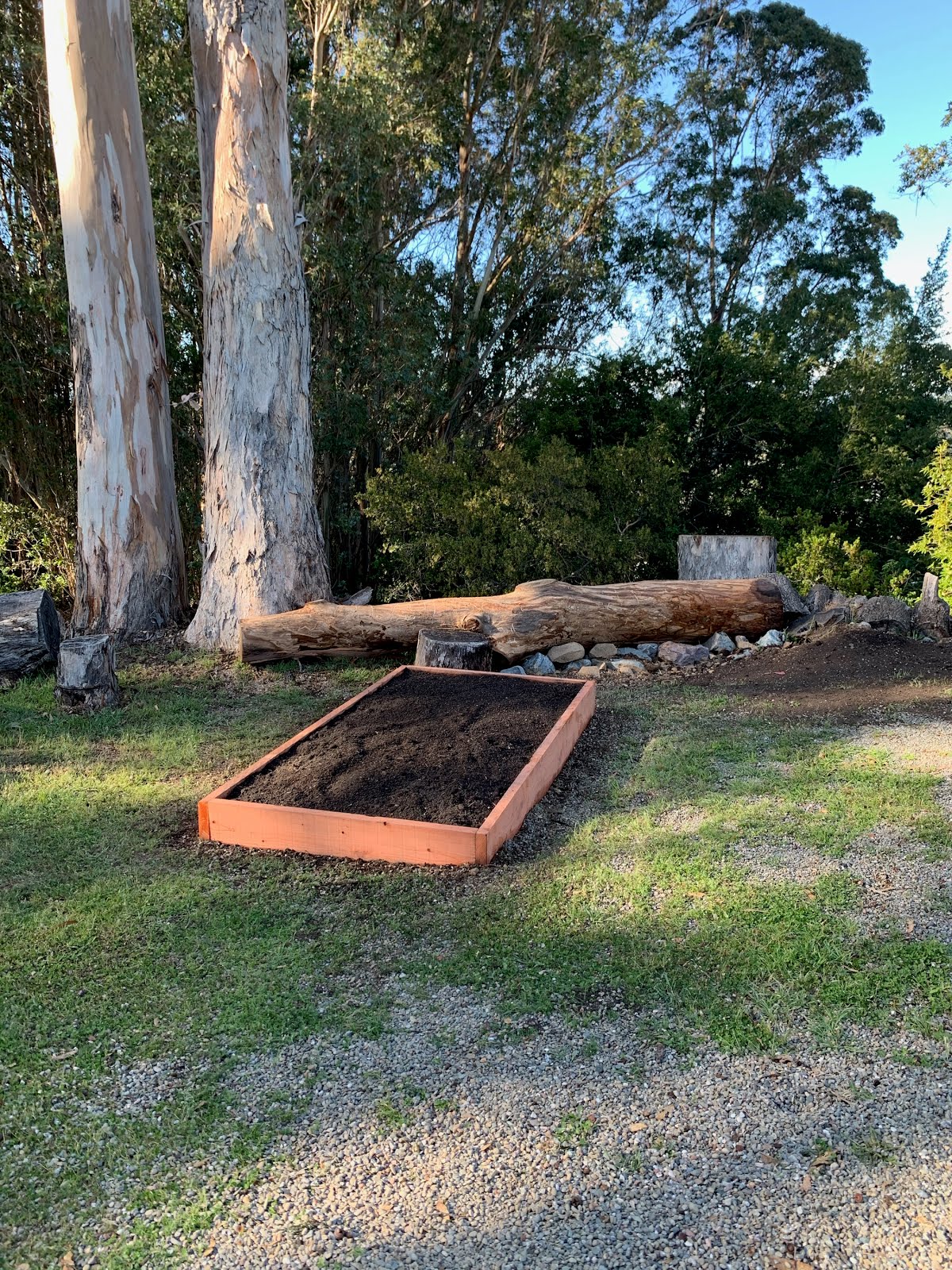
Since the Shelter in place order was put in place, I know many families and students have started their own home projects that include building a garden at their home! My family and I created a garden in our yard too. I took what I learned with me this year in sustainable agriculture and built an 8 foot by 4 foot garden bed with many other pots around it. We put a fence around it to keep deer, racoon, etc away. In the bed we planted dinosaur kale, lettuce, carrots, tomatoes, artichoke, basil, and broccoli. We have already made 3 delicious salads! I used the HTGMV textbook to implement proper spacing. Along with the garden I started a new beehive in my yard next to the garden to continue practicing sustainable agriculture. As well as set up a bait hive next to it to attract a wild swarm to fill the other bee box.
Giselle Zirpoli


Farm revival

The SustAg farm has been able to revive itself a bit over the last week in the middle of our shelter in place. We are very thankful to the Indian Valley Campus (College of Marin) Organic Farm for donating a station-wagon-full of starters to us! 

Over the last few days, volunteers have planted seven rows of tomatoes, squash, eggplant, beans, onions, and more. See the pictures below. We also managed to do some onion and garlic harvesting.

We will be donating much of what we grow to local organizations in need, like Whistlestop Wheels.

Thank you to all the volunteers who helped this week! Come volunteer to work on your student bed! Sign up at Google Classroom (find the link to the spreadsheet sign-up).  — Mr Stew

Car full of starters:


Weeding done √


Tomatoes and squash planted √


Hoop house weeded √


Some harvest, despite being away for two months!

Bonus pic: Mr. Stewart's goat


Friday, May 8, 2020

Supporting local farms

Bella


Due to COVID-19, the restaurant industry has not been needing anywhere near as much supply.
So my family has been buying fresh vegetables from Star Route Farms CSA, one of Bolinas’s
oldest farms. The farm has created delivery days and are selling directly to the public, and
deliver to Tiburon on Tuesdays between 10-11am. You pre-purchase your veggie box the week
before, they park in the City Hall parking lot, and have a drive-through touchless system where
customers can pick up their orders. You remain in your vehicle, you tell them your name, they
locate your order number, and then deposit a large bag of produce in your trunk without any
human contact. Everyone wears masks and gloves and the box is $30. Today, our box contained
2 bunches of carrots, 5 green little gems, 1 red butter lettuce, 1 head of frisee, 1 bunch of chard,
1 lb. of fava beans, 1 bag of wild arugula, 1 bag of mesclun, and 1 bunch of thyme. It is the
highlight of our week! They are the most delicious farm vegetables, from one of our favorite
restaurant’s (Watershed, Mill Valley) most beloved suppliers.


Tuesday, May 5, 2020

Home Garden Pest Management


As the shelter in place continues in Marin and the US, my family and I have been working on our own home garden to continue the sustainable practices I learned at the Redwood Farm this past year. But one of the problems we were having was pests. We planted seedlings of lettuce and tomatoes and the next day they were eaten by rats. This happened a few times before we decided to research and come up with a sustainable solution to the problem. 

So, what we did was encase the seedlings with wire mesh and pvc pipe. We constructed a cage for the crops to keep the rodents out so they can grow without disruption. We still water through the mesh, and it can be taken off to weed or observe the plants. This solution was hard to implement and it took a while to get the materials, but so far we have observed our crops being able to grow without rodents taking over.

Sarah Y


Friday, April 24, 2020

Bee Blog


Hello everyone!
This past Tuesday Redwood's bees were ready for pickup in Tennessee Valley. Our bees were purchased from a local beekeeper named Jennifer Berry. On Tuesday morning, I set the bees up in their hive on campus. I have gone back to visit them twice since then, and they seem very happy and busy making honey. Until our bees fill up the base box with honey, they will have access to a feeder to ensure that they have enough food to keep strong. To keep insects out of the hive, a downward facing metal layer has been placed in between the foundation box and the hive itself. Keep your fingers crossed for an abundance of RHS honey next year at the SustAg farmers markets!

Sincerely,
Elsa Davis

Amending soil

With stores limiting how many customers that be inside at a time, shopping has gone from a relatively easy task to something that can be a full-day outing. This in combination with the new recommendations to wear masks has made me want to get my produce from our yard instead of the store. Though we've grown rosemary and other herbs successfully in planter boxes, many of our planter boxes hadn't been tended to for a while and the soil looked dry and depleted of nutrients. To amend the soil and prepare it for the planting of new herbs like basil and other crops like tomatoes I added organic compost and some loam builder so my soil will retain nutrients and water more effectively. Additionally, I got out an old watering can to use in place of just a hose so the plants can benefit from more gentle watering and so there is less water waste. Hopefully, these steps will help my produce grow in a sustainable way while also letting me skip the trip to the store.
-Grace 

Tuesday, April 21, 2020

Salad Barrel

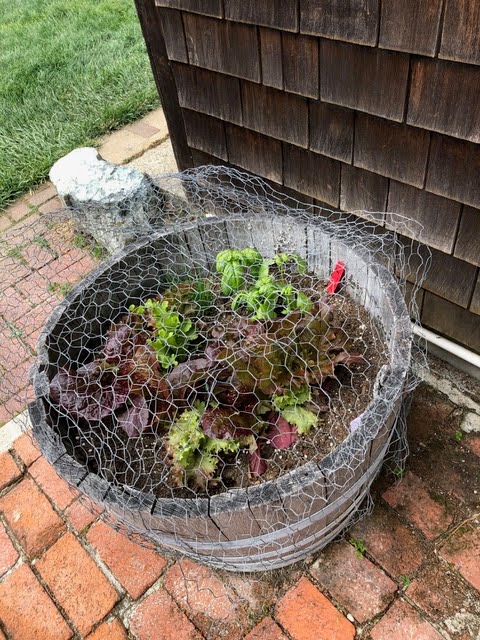
Due to corona virus we are all sheltered in place, so some things you can do to make this shelter in place a little more fun are start a garden or mini garden. My mom wanted to do this so I said I would help and we planted basil and some lettuces in this old planter barrel thingy. It has been pretty fun, just last night my mom and I made a salad with the lettuce we grew. It was pretty rewarding to be able to eat what you have just grown. This could also be a good idea if you don't want to go to the grocery store for certain items, you can grown them yourself. This is also a great way to save money during these times of uncertainty for many. It's really easy to start your own backyard mini garden, all you need is some dirt and seeds, patience helps also. I hope everyone is staying safe out there, if you can do it then get out and grow.--Chris


Saturday, April 18, 2020

My Backyard


With school closed for the rest of the year, sustainable agriculture students are unable to visit the Redwood Farm. However, this closure pushes students to apply what they have learned throughout the year about sustainability home. For example, this past week I have been planting using Grow Biointensive methods in my own backyard. I, as I am sure many other students are, am planning on utilizing my new farming skills and making a change at home. While all of the students are missing the Sust. Ag. farm dearly, this can be seen as a great opportunity for individual responsibility when it comes to our effect on the environment. Below I have attached a photo of the planting bed my family and I built this week! - Sedona

Thursday, April 16, 2020

Materials for home planting

With so much free time, now is the perfect time for everyone, not just sustainable agriculture students, to plant spring seedlings and take advantage of the nice weather! Many of the necessary supplies to start seedlings can already be found around the house. If purchasing seeds is not an option, they can be harvested from produce, such as tomatoes, cucumbers, and strawberries. Additionally, cardboard egg cartons are perfect to sprout the seeds before transplanting them into a larger pot or bed. To jumpstart the process, seedlings can be purchased directly from farmers market vendors. I was able to purchase pepper, tomato, and parsley plants from one of the vendors. To maximize production, the grow biointensive method can still be applied at home. Below is a picture of the parsley plants purchased from the farmers market. -Lauren

Sunday, April 12, 2020

Home Garden

How to Start a Sustainable Lifestyle During a Global Pandemic

Unfortunately, due to the recent COVID-19 outbreak, Redwood has shut its doors and the farm is no longer accessible. As boredom and restlessness to get back to the farm have ensued here is a list of tasks to keep your mind off of the current climate and shift towards growing sustainably at home!


Start to grow plants of your own! The photo above shows three of the nine bush bean plants I planted as soon as I heard the news that school would be cancelled. The plants are ready to be transplanted into raised beds in my backyard which will be constructed over the weekend; our first step to growing sustainably at home. 
Start composting! Compost is beneficial to any home garden and can transform bad soil into fertile, highly productive soil in no time. Any food scraps can be mixed with other organic waste such as yard scraps, sticks, and compostable containers. With enough space, a small pile could be constructed with just sticks, dried organic material, fresh organic material, and water. An old trash bin could do the same job, creating fresh, ready to use compost in as little as around 25 days. 

Lastly, we can all remain more conscious of our environmental footprint. During this time at home, try something new. Try creating that garden in your backyard you have waited so long to make. Try eating food from local sources by taking the time to visit an open-air farmer's market. Try spending some time outdoors (6 feet away from anybody) enjoying the natural surroundings our beautiful county has to offer as an inspiration to do your part in protecting what our planet has to offer.

Nick S
2019-20 4º Sustainable Agriculture


New Reality

The day is April 2, 2020 and the farm is going through a time it has
never seen before. With all students asked to stay home and school
being cancelled the farm is being unattended for. Even students have
attempted to ask the principal to work on the farm but no students are
allowed on campus. The farm is unattended for but the chickens (minus
the passing of one) are in the care of Mr. Stewart. The weather has
been a variety of bright sunlight to full rainy days and with this the
farm should be attaining it's adequate amount of rain and sunshine. As
we all pray and hope for the safety of the farm there's little to
nothing we can do. To make-up for our time missed on the farm students
are asked to work on their own farm if they have. I have seen friends
and myself spending a surplus of time on their farms with little we
are able to do during this time. -Jacob

Tuesday, March 31, 2020

Mimicking Nature Through Biodiversity, Jackson Walker


Jackson W
One of the problems with modern industrial farms is that their focus on monocropping coupled with their neglect for the soil microbiome and surrounding ecosystems make them extremely unsustainable in the long term. Natural ecosystems like forests persist through centuries because the incredible diversity of life they support makes them more adaptable to threats:  whenever something like a natural catastrophe or the introduction of an invasive species arises, having biodiversity increases the likelihood that whatever niches are left empty will be filled by a new species and the cycle of nutrients and energy through the food web will be able to continue. In order to make our farm more adaptable to problems like unexpected pest infestations or a die-off of important beneficials, it is crucial that we always look for new ways to increase biodiversity. One way to do that is by installing bat houses and owl houses around campus, so that these predators can eat pests like cucumber beetles and voles.

Sunday, March 29, 2020

School Closures and the Impact of our Farm

With the recent school closure, we had to leave our farm right at the beginning of the spring season. Unfortunately this means that not only do we lose a large portion of time we would normally spend working on the farm, we are also unable to plant new crops that would be able to utilize all this great rain we have been having. While our farm is suffering in some ways, people not being on the farm could also be a blessing in disguise. Without people constantly attending to their beds, nature may take its course and wonderful things may happen. Our bed group has already seen this happen multiple times! Earlier in the year, after leaving our bed alone for a few days, we began to get all these mystery sproutlings. It turned out to be arugula and a lot of it. And then it happened again with celery! Below are some pictures of how much celery had come in in just a few days. So instead of being completely bummed out that we can't work on our one beds at the moment, we should be somewhat optimistic of how many amazing crops could come out of this!

By: Natalia S

Here are some pictures taken by my group mates of when our celery first came in!

Away from the Farm :(

Ellie Abrams

This week in Sustainable Agriculture we are getting adjusted to the new online version. The assignments are now posted on google classroom where we see the agenda. It's a lot more difficult than being in class but considering what's going on in the world right now it's not too hard. The main difference is that we can't go to the farm and work on our beds. Half of the curriculum is spent outside, which is my favorite part about this class as it is very out of the ordinary compared to other classes and hands on. Luckily we get to Zoom once a week which is exciting. We are all still getting the hang of it being online and hopefully we get to go back to the classroom soon.

Thursday, March 19, 2020

SustAg away from the FARM

RHS SustAg is adjusting to life out of the school building and away from the farm due to COVID-19.  How are we adjusting?  Look for updates here.

Be well.

--Mr. Stewart

Market Day, March 6, 2020


Market Day, March 6, 2020
Jack Finnegan, 5˚

It is the first Friday of March, which means we have our monthly farmers market. As always, we will be located in the front lot by the flagpole and in the backlot from 2-3:45pm. Although it is the end of the winter season so we will not have as much produce, but we will still have potatoes, kale, celery, mixed greens, and possibly onions. The reason we don't have as much as normal is because throughout the winter we focused on cover crops and compost crops in order to maintain our soil integrity. We have also been focused on harvesting our bell beans in order to create new compost piles and to allow the roots and rhizomes to decompose in our soil, enhancing the quality and amount of nitrogen in our soil. Since we have smaller amounts of produce available, we will really have to focus on our marketing strategies, namely "stack em high, watch em fly," in order to create the appearance of abundance so that more people will be interested in buying our goods. The profits from these markets go to maintain tools on the farm, getting, new tools, buying seeds, soil, and other pieces of equipment needed on and around the farm. Be sure to stop by and support your local Redwood Sustainable Farm this Friday, see you there!

Guest Presentations


Nick Welch  3/4/20


This week in Sustainable Agriculture we had two guest speakers come on. First we had a passionate tree farmer come in on monday and talk about fruit forests and tree grafting. I had no idea what you can do with different fruits on trees. He explained to us that you can put different types of plums on one plum and put different types of apples on one apple tree. It takes a lot of time but it is something that I think is very fascinating. It is very quick as the tree starts producing in a year or so. This is something that takes a lot of patience but the end result is very cool. I think a special type of person that loves trees would be the best for this sort of job. The second guest speaker who came in on March 3rd spoke to us about sheeps. His name was Aaron and he was a shepherd. He talked about the joys and hardships of being a shepherd. Aaron seemed very passionate about his job and even mentioned he had a special connection with some of his sheep. He said his biggest problem is not having a home base between contracts to keep his sheeps. Overall I think having people come in who are passionate about their jobs is a very good thing for us to experience. 

Image result for shepherd

Wednesday, March 4, 2020

Sustainable Systems Guest Speakers - Permaculture and Shepherd

This past week in Sustainable Agriculture we had two guest speakers come into our class and talk to us about their livelihoods and how they connect with our sustainable systems/design unit. The first speaker, John Valenzuela, spoke to us primarily about permaculture and food forests. Permaculture is a way of viewing agriculture as a larger system, focussing on patterns observed in nature that promote sustainable growth and don't disrupt habitats. Food forests are agroforestry systems that practice growing crops with trees so large amounts of food can be packed into small spaces, all while focussing on the vertical growing aspect of plants. Another concept Mr. Valenzuela taught us about was grafting, a horticulture technique that allows people to use healthy rootstocks of fruit trees and transplant the better tasting varieties of that same fruit which grows into normal functioning trees. The following day, Aaron Gillam, a Redwood alum and now shepherd came to discuss his line of work. Mr. Gillam owns and operates Sweetgrass Grazing, a mobile sheep/goat grazing company. He highlighted how with this job he is a land steward and can control how he and his animals impact the land. His operation is used to suppress weeds, rebuild soils, and help prevent wildfires. Overall, both presentations were very engaging, interesting, and allowed time for many of our questions to be answered.


By: Ryan Carlson


Image result for sweetgrass grazing

Pictured Above: The second guest speaker and Owner/Founder of Sweetgrass Grazing, Aaron Gillam, out in the field running his operation